English

Views: 0 Author: Site Editor Publish Time: 2026-05-22 Origin: Site


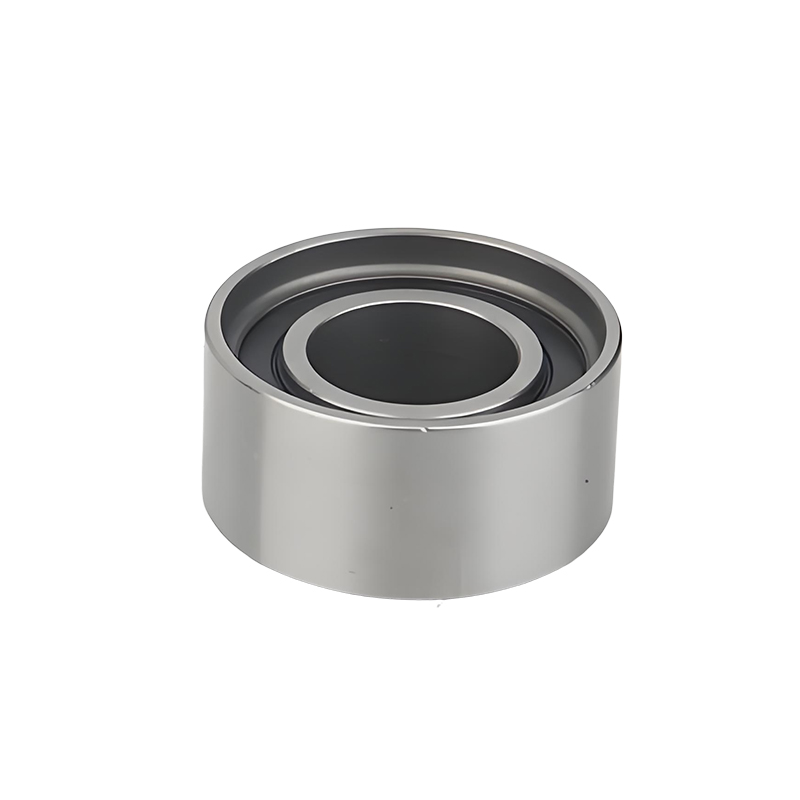
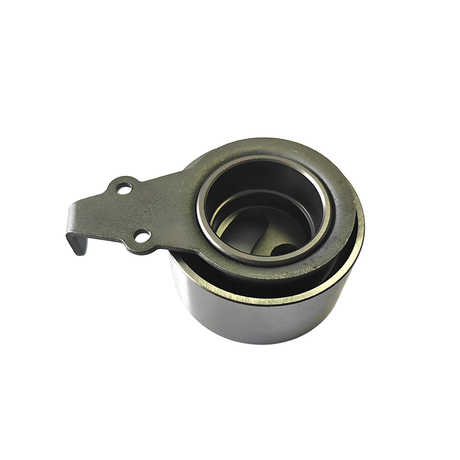
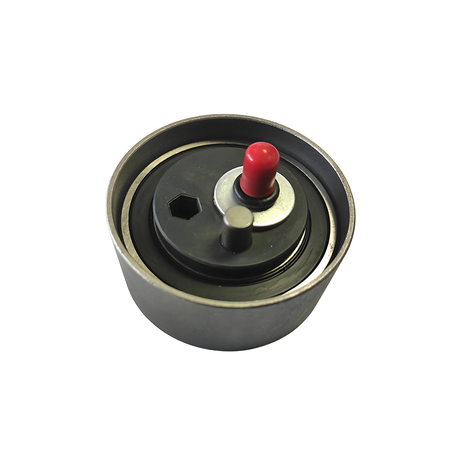
Special bearings for automobile tensioners (tensioners) are usually of a one-time press-fit structure. The inner ring of the bearing closely matches the wheel shaft, and the outer ring matches the wheel shell. The installation quality directly determines the rotation accuracy, noise level and service life of the tensioner. The complete process is explained one by one below.
1. Preparations before installation
Environment and tool preparation. Installation should be carried out in a dry and clean environment to prevent dust and debris from entering the bearing. It is necessary to prepare special pressing tools (hydraulic press or special bearing pressing sleeve), torque wrench, copper rod (or nylon rod), clean wiping cloth, grease, and vehicle lifting equipment such as jack and safety bracket.
Parts inspection and verification. First, check whether the model of the new tensioner assembly completely matches the vehicle, and check whether there are any cracks, deformation, or rust on the appearance. If the tensioner wheel is designed with the bearing and wheel body separated, it is necessary to separately check the bearing model, whether there are burrs and scratches on the inner and outer rings, whether the ball (roller) surface is intact, and turn it gently by hand to confirm that the rotation is flexible and free of jamming. At the same time, check the surface of the mounting journal to ensure that there are no wear grooves or rust. If the journal is obviously worn, the shaft needs to be repaired or replaced first, otherwise the new bearing will fail soon after it is installed.
Cleaning process. Use a clean cloth dipped in detergent to carefully wipe the mounting journal, bearing seat hole and matching surface of the tensioner wheel body to completely remove oil, rust and dust. Do not touch the mating surface directly with your hands after cleaning to prevent contamination from sweat and grease.
2. Applying grease
Most tensioner bearings are maintenance-free sealed types, but it is still necessary to apply an appropriate amount of grease on the mating surfaces of the journal and the bearing inner ring during installation to reduce frictional resistance during press-in and provide initial lubrication protection. The type of grease should be selected strictly in accordance with the requirements of the vehicle manufacturer. The grease should be applied evenly and in an appropriate amount, but not too much - too much grease will cause the temperature to rise due to stirring and heating during high-speed operation, and accelerate the aging of the seals. If the bearing is a non-sealed type (such as the double-row tapered roller bearing structure of some older models), the total amount of grease should be controlled at about 50% of the internal clearance of the bearing to ensure lubrication without overflowing.
3. Press-in installation of bearings (core link)
This is the most critical step in the entire installation process. Improper operation will directly lead to bearing damage.
It is strictly prohibited to hit the bearing directly. Under no circumstances is it allowed to use a hammer to directly hit any part of the bearing, including the inner and outer rings and balls. Otherwise, it will cause deformation of the cage, crushing of the raceway, change of clearance, and even copper powder (if a copper rod is used) to fly into the cage and cause early failure.
Press-in direction and stress point. Installation pressure must be applied directly to the interference fit ferrule end face. Specifically: when the bearing is installed on the shaft, the pressure should act evenly on the end face of the inner ring; when the bearing is installed in the seat hole, the pressure should act evenly on the end face of the outer ring. Never exert force on the rolling elements or cage.
It is recommended to use a hydraulic press or a special press sleeve. For tensioner bearings with large interference, the most reliable way is to use a hydraulic press to press the bearing in slowly and evenly. If conditions are limited, you can use a copper rod or nylon rod to press against the end face of the bearing, and tap gently evenly and symmetrically around the circumference with a hammer. Do not tap only one side, but apply force evenly like "drawing a circle" to allow the bearing to slowly slide into place. You can also use a special sleeve made of soft metal (copper or low carbon steel). The inner diameter of the sleeve is slightly larger than the journal and the thickness is about two-thirds to four-fifths of the thickness of the inner ring of the bearing. Cover the sleeve on the bearing and tap the end face of the sleeve with a hammer so that the force is evenly distributed on the entire end face.
Hot filling method (suitable for cases with large interference). If the interference between the bearing and the shaft is large and cold pressing is difficult, heating installation can be used. Place the bearing in the oil tank and heat it to 80 to 90°C, with the maximum temperature not exceeding 100°C. Excessive temperature will cause the bearing rings and rolling elements to anneal, reduce the hardness and shorten the service life. After heating in place, quickly take it out, and use a copper rod to guide the bearing to accurately push the bearing into the predetermined position of the journal. After cooling, a tight fit will be formed.
Judgment of installation in place. After the bearing is pressed in, it should fit perfectly with the end face of the journal or seat hole without tilt or offset. You can use a depth gauge or visually confirm that the gap between the bearing end face and the shaft shoulder is uniform.
4. Assembly and tension adjustment of the tensioning wheel
After the bearing is pressed into place, assemble the tensioner wheel body and the bearing together and install the fixing bolts. Don"t tighten it yet, just fix it with your hands.
Adjust belt tension. Pass the belt through the tensioner pulley and fix it on each pulley. Adjust the belt tension by rotating the adjustment bolt of the tensioner pulley or moving the tensioner pulley bracket. Belt tension should be moderate - too loose will cause slipping, abnormal noise and increased wear, while too tight will accelerate bearing load, shorten life and increase fuel consumption. Generally, press the middle part of the belt with your thumb, and the deflection should be about 10 to 15 mm (specifically, refer to the vehicle model maintenance manual). A belt tension meter can also be used for precise measurements.
Tighten the bolts. After the tension is adjusted in place, use a torque wrench to tighten the tensioner wheel fixing bolts according to the torque value specified in the vehicle maintenance manual. When tightening, tighten gradually in two or three times in a diagonal cross manner to ensure that the tensioning wheel is evenly stressed and not deflected. Different models have different torque requirements. The common range is between 45 and 60 N·m. Be sure to refer to the manual data.
5. Post-installation inspection and verification
Manual turning check. After installation, turn the tensioning wheel by hand to feel whether its rotation is flexible and smooth, and whether there is any sticking, abnormal noise or loose feeling. A normal tensioning wheel should rotate smoothly without obvious resistance.
Run verification. Start the engine and let it run at idle speed, listen carefully for any abnormal noise (such as "rustling" or "buzzing") at the tensioner pulley, and observe whether the belt is shaking, skipping teeth or wearing eccentrically. If any abnormality is found, stop the machine immediately for inspection.
Review tightening. After the vehicle has been running for a certain distance (usually 50 to 100 kilometers), the tightening status of the tensioner bolts should be rechecked with a torque wrench, because a small amount of "running-in settlement" will occur on the mating surface during initial operation, and the bolts may become loose.
6. Special precautions
If the tensioner bearing has an ABS magnetic coding ring (usually the brown side of the sealing ring is the magnetic side), the magnetic side must face the inside of the wheel during installation, facing the ABS sensor. During the installation process, stay away from magnetic field interference, do not touch the magnetic ring with your hands, and do not put the bearings together with strong magnetic objects, otherwise the magnetic signal will be damaged and the ABS system will fail.
If the tensioners on both sides of the coaxial vehicle are to be replaced at the same time, it is recommended to replace them in pairs, because the working conditions of both sides are similar, and replacing one side alone will cause uneven wear of the old and new parts.