English

Views: 0 Author: Site Editor Publish Time: 2025-07-01 Origin: Site


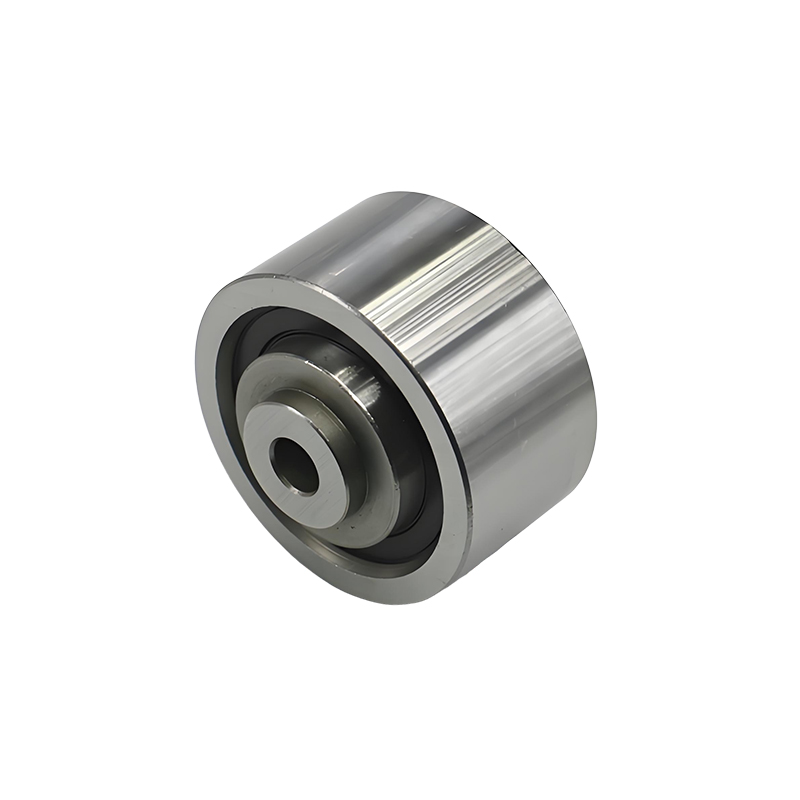
As a customized product designed for specific working conditions, the core advantages of automobile tightening wheels are reflected in three dimensions: high adaptability, high reliability and low maintenance requirements . The specific analysis is as follows:
1.
Customized
tightening wheel bearings for size and structure need to bear dynamic tension of belt or chain in a limited space. Standard bearings may cause installation difficulties or operation interference due to dimensional deviations. Non-standard bearings can customize the inner and outer diameters, widths and channel curvature according to the shaft diameter, wheel body thickness, installation hole position and other parameters of the tightening wheel. For example, adjust the inner diameter from standard 12mm to 13mm to match the special shaft diameter, or widen the outer ring to enhance the heat dissipation area to ensure a perfect fit with the tightening wheel.
2.
3.
Materials and process optimization
For the high-frequency vibration of the tightening wheel and the heat generated by belt friction, non-standard bearings can use high-temperature resistant materials (such as ceramic coated steel balls) or wear-resistant alloys (such as M50 high-speed steel), and the surface hardness is improved to above HRC60 through vacuum quenching process, extending service life. Some products will also spray molybdenum disulfide lubricant on the surface of the cage to reduce the friction coefficient during high-speed operation.
4.
1.
Dynamic load bearing capacity enhances
the tightening wheel bearings need to withstand multi-directional loads of belt tension, engine vibration and vehicle bumps. Non-standard bearings can increase the axial load capacity by more than 30% by optimizing the raceway curvature (such as adjusting from standard R1.5mm to R1.2mm) and the number of steel balls (such as increasing from 12 to 15), thereby reducing the risk of bearing failure caused by sudden load changes.
2.
3.
Improved fatigue and corrosion resistance.
For wet or salt spray environments (such as vehicles in coastal areas), non-standard bearings can be treated with stainless steel substrates or nickel plating, and combined with silicone rubber sealing rings (IP68 protection grade) to effectively block moisture and dust invasion. Some high-end products will also form nano-scale alumina ceramic layers on the surface of the raceway, increasing the fatigue life to more than twice that of standard bearings.
4.
1.
Self-lubricating and long-life design
non-standard bearings can be maintained without maintenance by embedding solid lubricants (such as polytetrafluoroethylene) or using oil-containing cages. For example, after a certain model of non-standard needle roller bearing was continuously running for 5,000 hours in laboratory tests, the friction coefficient only increased by 0.002, while standard bearings need to be replenished after 2,000 hours.
2.
3.
Fault warning and easy maintenance
Some intelligent non-standard bearings integrate temperature sensors or vibration monitoring modules to transmit data to the ECU through the CAN bus to warning the bearings to overheat or abnormal wear in advance. In addition, the modular design (such as the detachable sealing ring) allows for no removal of the tensioning wheel assembly during maintenance, and the maintenance time is shortened to less than 30 minutes.
4.
Taking the tightening wheel transformation project of a certain automobile manufacturer as an example, the original standard bearing (model 6203) had abnormal noise after running continuously for 200 hours in the bench test. The cause of the fault was fatigue peeling of the outer ring raceway. After switching to non-standard bearings, the following optimizations are passed:
· Material : Carburized steel (surface hardness HRC62, core hardness HRC35);
· Structure : Increase the number of steel balls to 14, and reduce the radius of curvature of the channel by 0.1mm;
· Luction : Use lithium-based grease containing 3% molybdenum disulfide.
After the modification, the bearing operates continuously for 800 hours under the same working conditions without any faults, the service life is increased to 4 times that of the original product, and the noise is reduced by 5dB (A), which verifies the performance advantages of non-standard bearings in extreme working conditions.
The non-standard bearings for automotive tightening wheels achieve accurate adaptation to complex working conditions through custom size, material optimization and intelligent design, and their reliability, durability and maintenance convenience are significantly better than standard bearings. For car companies or after-sales markets that pursue high-reliability transmission systems, non-standard bearings are ideal for reducing failure rates and extending maintenance cycles.