English

Views: 0 Author: Site Editor Publish Time: 2025-10-16 Origin: Site


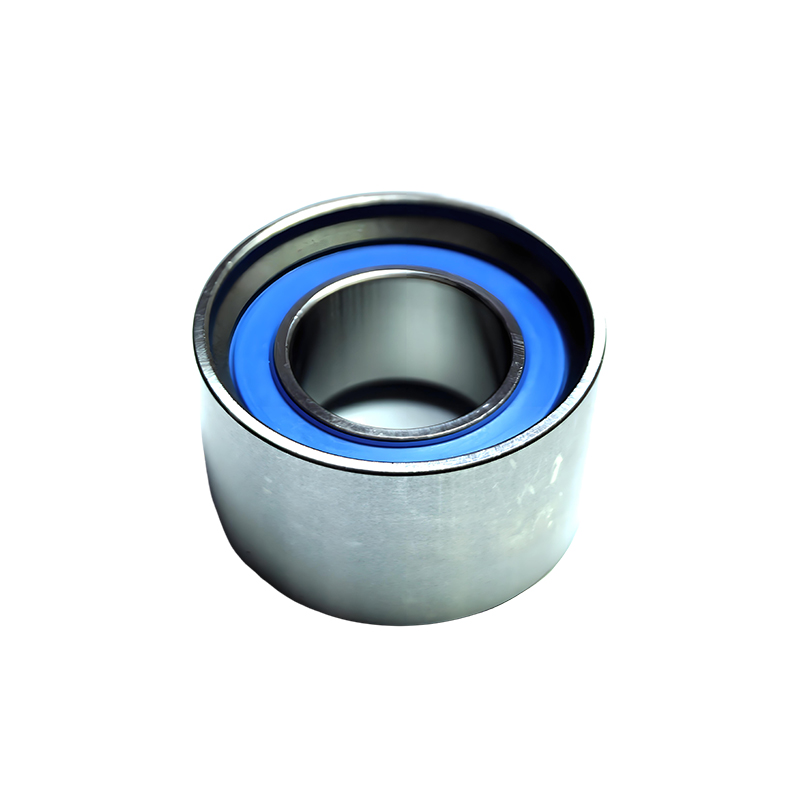
The maintenance and upkeep of non-standard bearings of automobile tensioners needs to start from the four core links of cleaning and inspection, lubrication and maintenance, installation and debugging, and regular inspections. Targeted plans should be formulated based on the characteristics of non-standard bearings. The specific operations and precautions are as follows:
1. Cleaning inspection: Thoroughly remove impurities and accurately assess the status
Disassembly and cleaning
Use special tools (such as bearing pullers) to disassemble the tensioner bearing to avoid deformation caused by violent operation.
Use gasoline, kerosene or special bearing cleaning agent to soak the bearing, and use a soft brush to lightly brush the rolling surface, raceway and cage to remove oil stains, metal shavings and other impurities.
Note: Wear protective gloves when cleaning to avoid direct skin contact with solvents; blow dry with compressed air or dry naturally after cleaning to ensure no residual cleaning agent.
Appearance and size inspection
Raceway/Rolling Surface: Check for signs of spalling, pitting, cracks or unusual wear.
Cage: Observe whether it is broken, deformed or loose.
Clearance and dimensional accuracy: Use a micrometer to measure the inner diameter, outer diameter and width, and compare it with the non-standard design parameters to confirm whether it exceeds the tolerance range.
Rotation test: Manually rotate the bearing to feel whether it is smooth and whether there is any jamming or abnormal noise.
2. Lubrication and maintenance: select suitable lubricant and control the dosage
Lubricant selection
Select lubricant according to the working environment (temperature, humidity, speed):
High-temperature environment: Use high-temperature-resistant lithium-based grease (such as Mobil high-temperature butter).
High-speed operation: Use synthetic grease with low viscosity and strong anti-wear properties.
Closed system: Some fully enclosed tensioner bearings do not require regular lubrication and need to be replaced as a whole.
Lubrication operation
Application method: Use a grease gun or brush to evenly apply grease to the rolling surfaces, raceways and cage gaps to avoid excessive overflow and contamination of surrounding components.
Filling amount control: Generally fill 1/3~1/2 of the internal space of the bearing. Too much will cause high temperature, and too little will cause insufficient lubrication.
Note: Butter lubrication is prohibited for some models (such as the Trumpchi GS5 timing belt tensioner) and the manufacturer's recommendations must be followed, otherwise the belt may slip.
3. Installation and debugging: Standardize operations to ensure appropriate pre-tightening force
Installation method
Use special tools (such as induction heaters) to install bearings to avoid deformation caused by hammering or strong stamping.
During heating installation, the temperature must be strictly controlled below 120°C to prevent material annealing.
Before installation, wipe the surface of the shaft and bearing seat with a soft cloth to ensure that there are no impurities.
Preload adjustment
Adjust the tension of the tensioner pulley according to the requirements of the automobile transmission system, and use a torque wrench to fix the bolts to ensure that the belt is appropriately tight.
Too tight: causing the bearing to heat up and shortening its service life; too loose: causing the belt to slip and reduce transmission efficiency.
4. Regular inspection: Establish maintenance cycle to prevent early failure
Inspection cycle
Routine use: Inspect every 2 years or 60,000 kilometers and replace if necessary.
Severe working conditions (such as dusty, high temperature, heavy load): shortened to every 1 year or 30,000 kilometers.
Operation status monitoring
Noise: When driving, pay attention to whether there are abnormal whistling or banging sounds in the tensioner area.
Vibration: Use a vibration analyzer to detect the vibration frequency of the bearing. Exceeding the standard may indicate internal damage.
Temperature: An infrared thermometer monitors the bearing surface temperature. If it exceeds 80°C, the machine must be shut down immediately for inspection.
5. Special precautions for non-standard bearings
Choice of alternatives
If the bearing reaches the end of its life, it needs to be replaced with a non-standard product of the same or higher quality as the original bearing to avoid early failure caused by the use of low-quality substitutes.
Sealing maintenance
Check whether the sealing ring of the tensioner is intact to prevent moisture and dust from intruding and causing corrosion.
If the sealing ring is found to be aged or damaged, the entire set of bearings must be replaced in time.
environment adaptation
Humid environment: Use stainless steel bearings or add anti-rust coating.
Corrosive environment: adopt fully enclosed structure or special sealing design.