English

Views: 0 Author: Site Editor Publish Time: 2025-08-05 Origin: Site


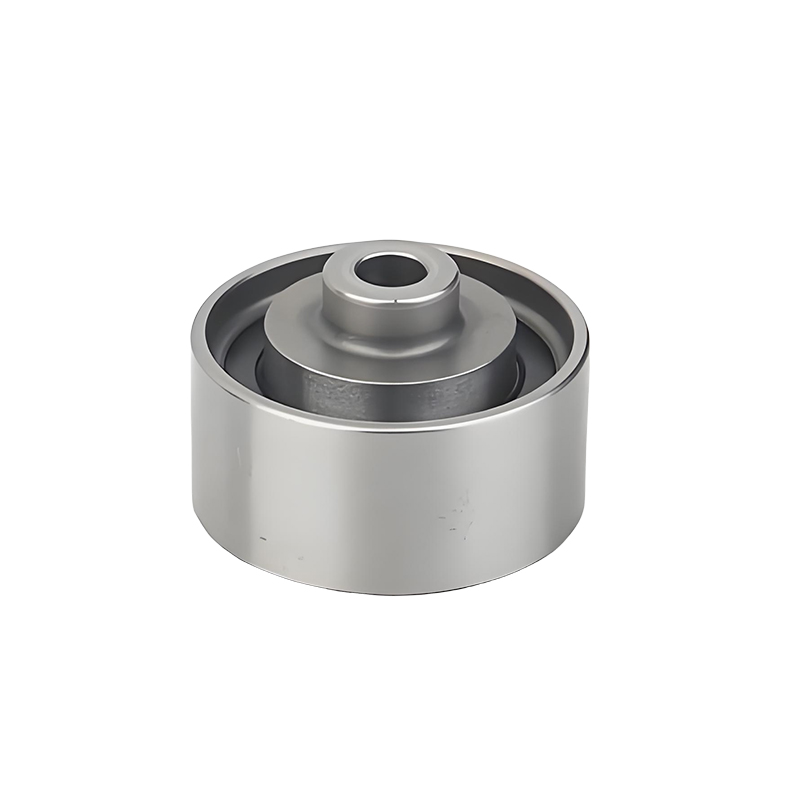
Non-standard bearings for automotive tightening wheels are customized bearings designed for special working conditions of tightening wheels (such as high speed, variable load, space limitation, etc.). Their performance directly affects the reliability of tightening wheels and the stability of the engine timing system or accessories transmission. The following are key precautions for using such bearings, covering installation, operation, maintenance and failure prevention:
1. Preparation before installation
Confirm that the bearing model and matching non-standard bearing size, tolerance, load capacity and other parameters must be fully matched with the tightening wheel design to avoid early failure due to model errors.
Check the outer ring, inner ring and raceway of the bearing for any bumps, rust or cracks to ensure that the surface finish meets the requirements (usually Ra≤0.8μm).
Dip the non-woven fabric for cleaning and lubrication with anhydrous ethanol or special cleaning agents, thoroughly clean the bearings and tightening wheel installation holes and journals, and remove impurities such as oil stains and metal chips.
Apply an appropriate amount of high-temperature grease (such as lithium-based composite grease), focusing on lubrication of the contact area of the cage, roller and raceway to avoid dry friction.
Tools and environment require special pressing tools (such as hydraulic pressing beds or bearing heaters) to avoid direct hitting the inner or outer ring of the bearing to prevent deformation.
The installation environment must be dust-free and dry, and the temperature must be controlled at 10-40℃ to prevent excessive humidity from causing emulsification of the lubricant.
2. Installation process specifications
Heating installation method (applicable to interference fit) heats the bearing to 80-100℃ (using an electromagnetic induction heater or oil bath), and quickly puts it into the shaft journal after expansion to ensure that the bearing and the shaft shoulder are closely fit.
Note: The heating temperature must not exceed 120℃, otherwise it may damage the bearing cage or sealing structure.
The cold pressing installation method (applicable to clearance matching) uses a copper sleeve or a nylon sleeve as a guide tool to apply pressure evenly (the pressure direction must coincide with the axis) to avoid biased load causing the bearing to tilt.
The pressing force must be controlled within the design range (usually the bearing inner diameter × 10-15kN) to prevent excessive pressure installation from damaging the raceway.
Preload force adjustment According to the design requirements of the tightening wheel, by adjusting the bolt torque or spring preload force, ensure that the bearing clearance is within the range of 0.02-0.05mm (using a feeler gauge or a dial gauge to detect).
Key points: Inadequate preloading force will cause vibration, and excessively large will accelerate wear.
3. Key points of operation and maintenance
Temperature monitoring uses infrared thermometer to regularly detect the temperature of the outer ring of the bearing, and the temperature should be lower than 80℃ during normal operation. If the temperature continues to rise (>100℃), it may be caused by insufficient lubrication, excessive load or installation deviation, and the machine needs to be shut down and checked immediately.
Noise and vibration analysis Stethoscope detects bearing operation noise. Abnormal noise (such as clicks, whistling sounds) may indicate roller damage, cage breakage or lubrication failure.
Use a vibration analyzer to monitor the frequency spectrum. If the vibration amplitude of the 1-fold frequency exceeds the standard, the bearing should be checked for neutrality or shaft bending.
Lubrication management Lubrication: After installation, you need to manually rotate the bearing several turns to make the grease evenly distributed.
Grease replenishment cycle: Replenish grease every 5,000-10,000 kilometers according to working conditions (such as high temperature and high dust environment), and the supplement amount is about 1/3 of the initial filling amount.
Grease selection: Prefer high temperature resistant greases compatible with bearing materials (such as NLGI No. 2 lithium grease) to avoid mixing greases of different brands or models.
4. Fault prevention and treatment
Early failure modes of common failure modes: raceway indentation or cage deformation due to improper installation (such as inclination, excessive interference).
Fatigue peeling: After long-term high load operation, scale peeling occurs on the surface of the roller or raceway.
Lubrication failure: Grease ages, contamination or leakage, resulting in direct contact wear of metal.
Sealing damage: Dust or moisture invades, causing corrosion or wear of abrasive particles.
Troubleshooting process step 1: Check whether the tensioning force of the tightening wheel is normal, and eliminate the additional load caused by the belt being too tight or too loose.
Step 2: Remove the bearing and observe the raceway color (normally silver-gray, blue or black after overheating).
Step 3: Use a microscope to detect whether there are cracks or pitting corrosion on the surface of the roller and measure whether the play exceeds the tolerance range.
Step 4: Analyze the grease sample and detect moisture, impurity content and the degree of oxidation of base oil.
The following conditions are required to replace the bearing immediately if the following conditions occur: the surface peeling area of raceway or roller surface is >10% contact area.
The cage is broken or severely deformed.
The clearance exceeds 2 times the initial value (such as the initial clearance 0.03mm, the failure threshold is 0.06mm).
The sealing ring ages and cracks, resulting in grease leakage or foreign matter invasion.
5. Special considerations for non-standard bearings
Customized design risks The load capacity, speed limit and other parameters of non-standard bearings must be strictly matched with the tightening wheel working conditions to avoid over-design use (such as low-speed bearings used in high-speed working conditions).
Suppliers are required to provide bearing fatigue life calculation papers and test verification reports to ensure reliability.
High-carbon chromium bearing steel (GCr15) or carburized steel (such as 20CrMnTi) is preferred for material and process optimization. After quenching + low-temperature tempering, the hardness reaches HRC58-62.
It is recommended to use reinforced nylon or copper alloys to improve high temperature and impact resistance.
Inventory and traceability management non-standard bearings must be stored separately to avoid mixing with standard bearings, and marked with vehicle models, tightening wheel models and production batches.
Establish bearing life files, record installation time, operating mileage and fault information, and provide data support for subsequent design improvements.