English

Views: 0 Author: Site Editor Publish Time: 2025-07-25 Origin: Site


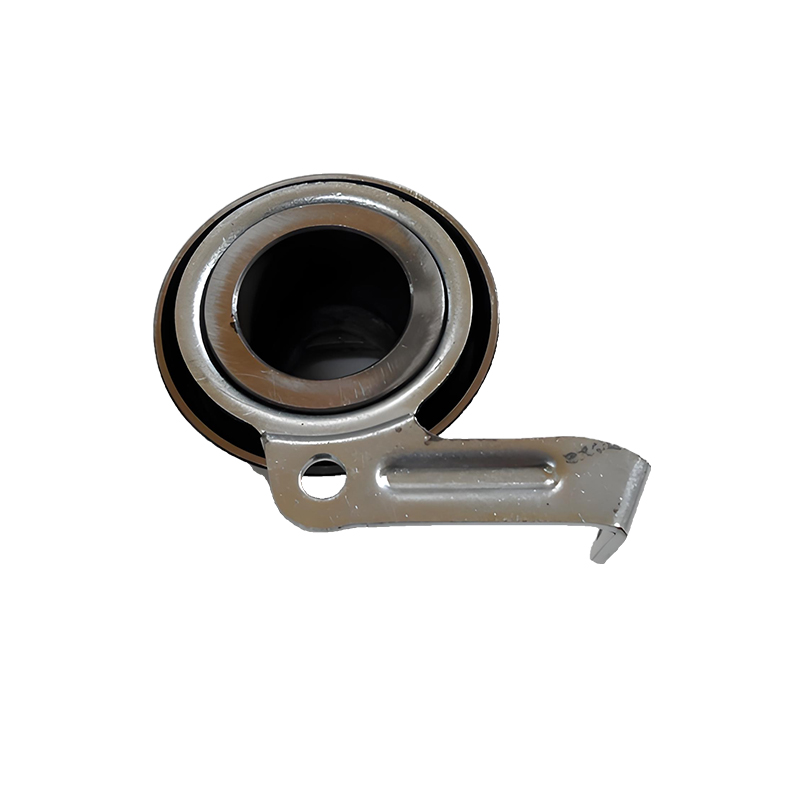
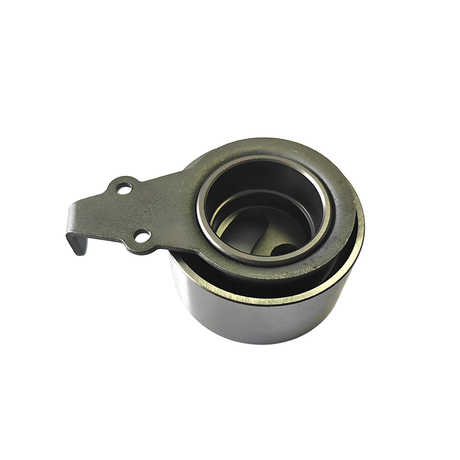
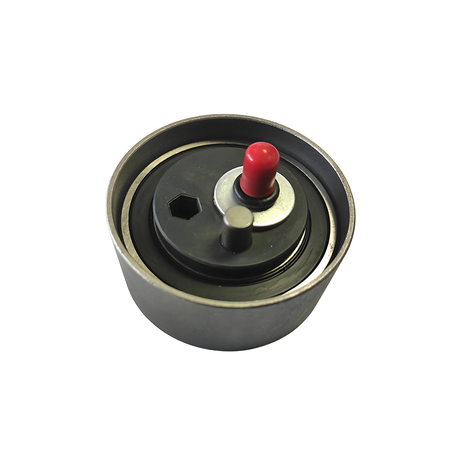
Tightening wheel bearings are key components used in mechanical transmission systems to adjust the tension of belt or chains. Their structure and working principle directly affect the stability, life and efficiency of the transmission system. The following is a detailed analysis from four aspects: structural composition, working principle, failure mode and maintenance key points:
1. Structural composition
The tightening wheel bearing is usually composed of four parts: the bearing body, the tightening arm, the spring device and the fixed bracket. Each part works together to achieve the tensioning function.
1. Bearing body
type:
Deep groove ball bearings or tapered roller bearings are mostly used. The former is suitable for scenarios where radial loads are mainly used (such as engine accessory belts), and the latter can withstand bidirectional axial forces (such as heavy mechanical chain transmission).
Sealing design:
To prevent grease leakage and external impurities from invading, bearings are usually equipped with rubber seals (such as RS type) or metal dust covers (such as ZZ type). Some high-end products adopt contact seals (such as 2RS type), with better sealing properties but slightly greater friction.
Lubrication method:
Long-acting grease (such as lithium-based grease or polyurea grease) is used, and the filling amount is generally 30%-50% of the inner space of the bearing to ensure stable operation within the temperature range of -40℃ to 150℃.
2. Tighten the arm
Material:
Usually high-strength aluminum alloys (such as A356) or ductile iron (such as QT450), taking into account both lightweight and impact resistance.
structure:
One end of the tightening arm is connected to the bearing, and the other end is fixed to the spring device by bolts or rivets. Some designs use adjustable tightening arms, which fine-tune the initial tension force through the threaded structure.
Surface treatment:
In order to improve corrosion resistance, the surface of the tightening arm is often subjected to Dacrocoated or electrophoretic coating, and the thickness is controlled at 8-12μm.
3. Spring device
Type: coil spring: Most commonly used, elastic force is generated by compression or tension, and the spring stiffness coefficient (k value) directly affects the tension stability.
Torsion spring: suitable for space-constrained occasions (such as certain generator tightening wheels), adjusting tension by torsion angle.
Material:
Spring steel (such as 60Si2MnA) is used, and the hardness reaches HRC45-50 after heat treatment, ensuring that there is no deformation under 100,000 cycle loads.
Preload design:
The initial preloading force of the spring is usually 1.2-1.5 times the working tension force to compensate for the elongation and wear of the belt or chain.
4. Fixing bracket
effect:
Fix the tightening wheel bearing to the engine or frame to limit its movement trajectory.
structure:
Most of them are made of stamped steel plates or cast aluminum alloys, and are connected to the body through bolts or positioning pins. Some brackets integrate cushioned rubber pads to absorb vibration and shock.
2. Working principle
The tightening wheel bearing maintains the constant tension of the belt or chain through the spring elastic force and dynamic adjustment mechanism. The working process can be divided into the following steps:
1. Initial tension
During installation, the bearings are pressed against the belt or chain by rotating the tightening arm or adjusting the spring pretension force to eliminate initial slack.
At this time, the spring is in a compressed or stretched state, storing elastic potential energy.
2. Dynamic adjustment
Belt/chain extension:
After long-term use, the belt will be stretched due to wear or thermal expansion, and the chain will become loose due to increased pitch.
Tightening wheel response:
The spring releases elastic potential energy, pushes the tightening arm to rotate about the fixed axis, drives the bearing to move outward, and automatically compensates for the elongation.
Force balance:
When the spring force reaches balance with the belt/chain tension, the tensioning wheel stops moving and maintains a stable tension.
3. Vibration suppression
The rolling element (steel ball or roller) inside the bearing forms an elastic contact with the inner and outer rings, which can absorb part of the vibration energy.
The damping characteristics of the spring device further attenuate high-frequency vibrations and reduce transmission system noise (usually 3-5dB reduction).
3. Analysis of failure mode and cause
Common failure forms and root causes of tightening wheel bearings are as follows:
The main reasons for failure mode performance
The bearing stagflation tight wheel cannot rotate freely, the grease is dried up, the seal fails, resulting in impurities invasion, and the bearing rust
The spring break tension suddenly loses the spring fatigue exceeds the limit (more than 100,000 cycles), material defects, excessive preload force
The tension arm breaks the tension wheel falls off the tension arm material is insufficient, overload impact (such as belt stuck), welding defects
Unusually worn bearing inner or outer rings have poor centering of groove belts, excessive tension, resulting in excessive loading of bearings, and insufficient surface hardness of rolling elements (HRC < 58)
Seal failure grease leaks or external water inlet sealing ring aging, sealing ring is scratched during installation, working temperature is too high (>120℃)
4. Maintenance and replacement points
1. Regular inspection
Tension force detection:
Use a belt tension gauge (such as PT-3) to measure the belt vibration frequency, or directly measure the tension by spring scale method to ensure that the design value is met (such as the belt with engine accessory is usually 200-400N).
Bearing rotation inspection:
Manually rotate the tightening wheel, and there should be no stagnation or abnormal noise. If the rotational resistance increases significantly, the bearing needs to be replaced.
Spring status assessment:
Observe whether the spring has deformation (such as length change >5%) or cracks, and replace it if necessary.
2. Replacement process
Remove the old parts: loosen the fixing bolts of the tightening arm to release the spring elasticity (be careful to wear protective gloves to prevent the spring from popping out and injuring people).
Take out the tightening wheel bearing and clean the impurities on the installation surface.
Install new parts: Apply appropriate amount of grease into the bearing and install the tightening arm in the original direction.
Adjust the spring preload to a specified value (usually aligned by special tools or marking lines).
Test verification: Start the engine and observe whether the belt is running smoothly without deviation or jitter.
Use a stethoscope to check the bearing area to confirm that there is no abnormal noise.
3. Lubrication supplement
If the bearing is well sealed and the working temperature is less than 80℃, grease can be added every 2 years; if the environment is harsh (such as dusty and high temperature), it needs to be shortened to once a year.
Use a special oil injection gun when replenishing to avoid excessive grease causing the seal ring to be extruded.