English

Views: 0 Author: Site Editor Publish Time: 2025-05-21 Origin: Site


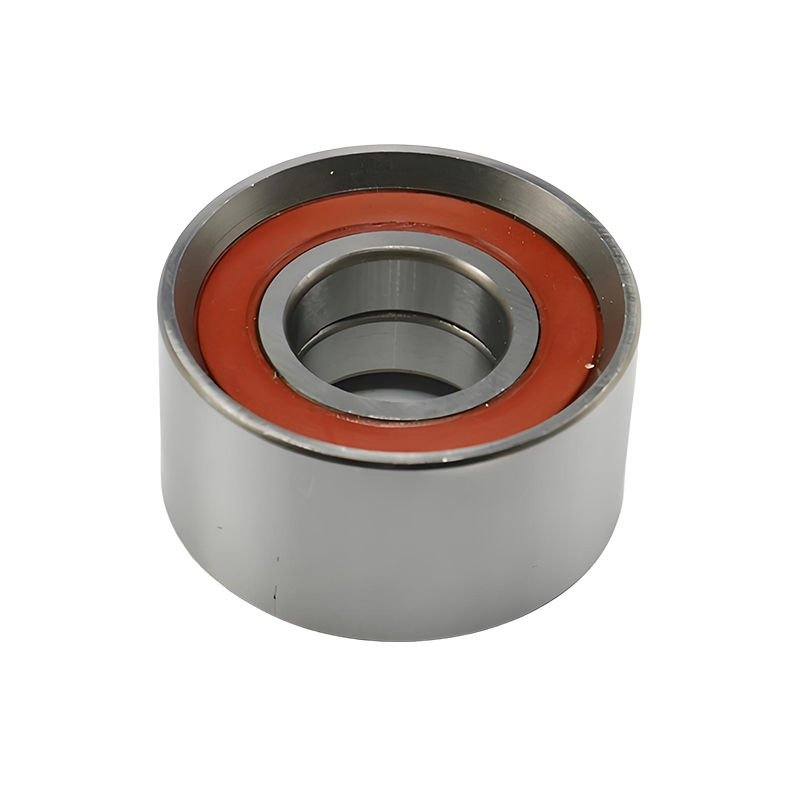
Tightened wheel bearings may fail or be damaged if:
Inadequate lubricant or contamination: Tightened wheel bearings require sufficient lubricant to reduce friction and wear. If the lubricating oil is insufficient or contaminated (such as mixed impurities, moisture, etc.), it will increase friction inside the bearing and increase temperature, which will accelerate the wear and damage of the bearing.
Lubrication system failure: Lubrication system failure, such as oil pump failure, oil circuit blockage, etc., may also cause the tightened wheel bearing to not be lubricated in time, resulting in failure.
Excessive load of the transmission system: When the load borne by the automotive transmission system exceeds the designed load capacity of the tightening wheel bearing, the bearing may be damaged due to overload. For example, when the vehicle is heavily loaded, climbed, or accelerated, the load on the powertrain increases, which can damage the tightened wheel bearings.
Frequent start and braking: Frequent start and braking can also cause tightened wheel bearings to bear huge impact loads, thereby accelerating their wear and damage.
Inaccurate installation location: The installation location of the tightening wheel bearing needs to be adjusted accurately to ensure it works properly. If the installation position is inaccurate, it may cause the bearing to bear uneven loads, thereby accelerating its wear.
Improper adjustment of tension: The tension of the tightening wheel bearing needs to be adjusted appropriately. If the tension is too high, it will increase the load and wear of the bearing. If the tension is too small, it may cause the belt or chain to slide, which will affect the transmission efficiency.
Material quality issues: The material quality of the tightening wheel bearing directly affects its performance and life. If there are defects in the material, such as internal cracks, inclusions, etc., the bearing may be damaged during use.
Manufacturing process problems: Improper manufacturing process can also lead to defects in tightening wheel bearings, such as dimensional deviations and excessive surface roughness. These problems may affect the performance and life of the bearing.
High temperature environment: In high temperature environments, the lubricating oil from tightening wheel bearings may deteriorate, thereby reducing lubrication. At the same time, high temperatures may soften the bearing material and reduce its load-bearing capacity.
Corrosive Environment: In a corrosive environment, tightened wheel bearings may be chemically corroded, resulting in surface damage and degradation of performance.
Recently, Chuangxiang Laser Technology Co., Ltd. A cooperation intention was reached with a domestic manufacturing company with its laser cutting technology and service team. The two parties will cooperate in the application of laser cutting equipment and related process optimization, and jointly explore how to improve production efficiency, ensure reduced quality and provide technical support for the product upgrade of manufacturing companies.
This collaboration is Chuangxiang Laser Technology Co., Ltd. important measures to expand the market and promote the development of intelligence and automation in manufacturing. The two parties are full of confidence in cooperation and hope to work together to create classic cooperation cases in the industry through complementary advantages, promote more companies to pay attention to the application of laser cutting technology in production, and jointly promote the development of manufacturing.