English

Views: 0 Author: Site Editor Publish Time: 2025-07-16 Origin: Site


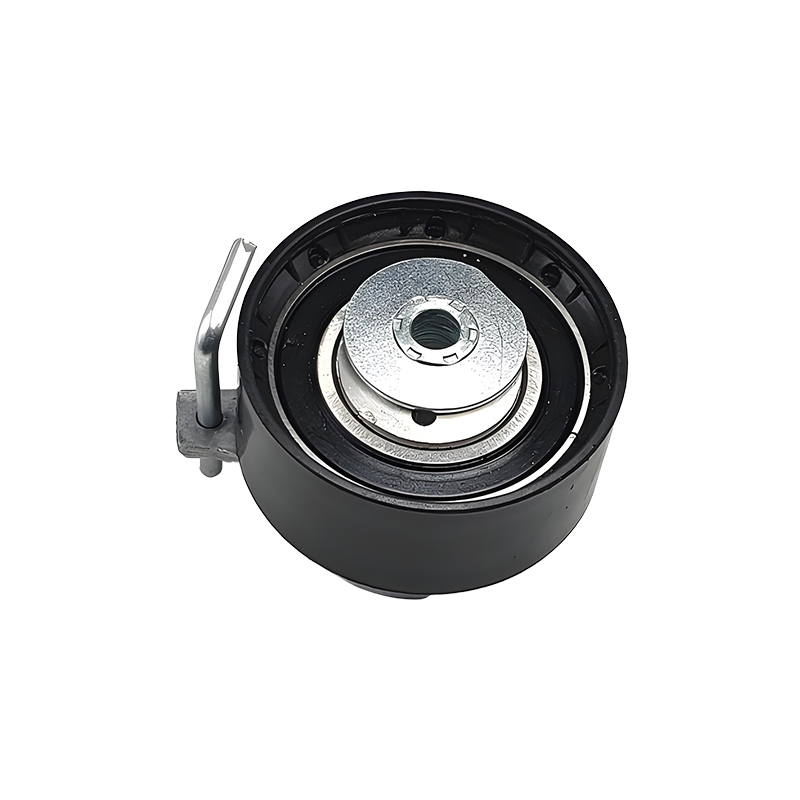
Automotive tightening wheel non-standard bearings are customized bearings designed for tightening wheels. Their size, structure or performance parameters are adjusted according to specific vehicle models, engine layout or usage conditions to meet non-standardized needs. Compared with general-purpose bearings, non-standard bearings have more advantages in adaptability, durability and functional integration, and are mainly used in the following scenarios:
1. Engine front-end accessories drive system (FEAD)
The tightening wheel is the core component of the FEAD system. By adjusting the belt tension, the engine accessories (such as generators, air conditioning compressors, water pumps, steering assist pumps, etc.) are ensured to operate stably. Applications of non-standard bearings in this scenario include:
Case of compact engines with limited space: The engine compartment of hybrid models is compressed due to the integrated motor, battery and other components, and tightening wheel bearings with smaller diameter or special-shaped structures are required to adapt to narrow installation space.
Advantages: The non-standard design can reduce the outer diameter or axial length of the bearing, avoid interference with other components, and ensure load-bearing capacity.
High power density engine case: Accessories of turbocharged engines or high performance engines need to withstand higher tension (up to thousands of N), and general-purpose bearings may fail early due to insufficient strength.
Advantages: Non-standard bearings use high-strength materials (such as carburized steel, ceramic hybrid bearings) or optimized raceway design to improve rated dynamic load and fatigue life.
Special belt layout requirements case: Some models use multi-wedge belts or synchronous belts to replace traditional V-belts, and the groove shape, angle or width of the tightening wheel bearings needs to be customized to match the belt cross-section to prevent slippage or biased grinding.
Advantages: Non-standard bearings can accurately control the contact area and pressure distribution between the belt and the wheel groove, and improve transmission efficiency.
2. Special operating conditions of new energy vehicles (NEVs)
The drive systems of new energy vehicles (such as motors, reducers) and thermal management systems (such as electronic water pumps, electric compressors) put forward new requirements for tightening wheel bearings:
High speed demand cases for motor drive systems: Electric vehicle motor speeds can reach 15,000-20,000 rpm, much higher than traditional engines (usually ≤8,000 rpm), and general bearings may cause cage deformation or lubrication failure due to centrifugal force.
Advantages: Non-standard bearings adopt high-speed design (such as lightweight cages, low friction seals) and special grease to ensure stable operation at extreme speeds.
Wide temperature working environment case: Electric vehicle battery thermal management system needs to operate within the range of -40℃ to 85℃, and the bearings need to adapt to material expansion/shrinkage differences caused by drastic temperature changes.
Advantages: Non-standard bearings use low-temperature resistant rubber sealing rings and high-temperature greases, and optimize the play design to avoid low-temperature stagnation or high-temperature leakage.
Low noise and vibration requirements case: New energy vehicles are sensitive to NVH (noise, vibration and sound and vibration roughness), and the slight vibration of general-purpose bearings may be amplified into perceived noise.
Advantages: Non-standard bearings reduce operating noise (can be reduced to below 30dB) by optimizing raceway roundness, surface roughness (Ra≤0.1μm) and preloading force.
3. Heavy-load application of commercial vehicles and special vehicles
The tightening wheels of commercial vehicles (such as trucks, passenger cars) and special vehicles (such as construction machinery, agricultural machinery) need to withstand greater loads and impacts:
Long life and high reliability requirements case: The engine running time of heavy trucks may exceed 10,000 hours, and universal bearings are prone to peeling off or wear failure due to fatigue.
Advantages: Non-standard bearings adopt long-life design (such as surface hardening, ceramic balls) and reinforced cages, with a lifespan of 2-3 times that of universal bearings.
Adaptability cases of harsh working conditions: The tightening wheels of construction machinery (such as excavators, loaders) are often exposed to silt and dust environments, and general bearings are prone to grease contamination due to seal failure.
Advantages: Non-standard bearings are equipped with multiple sealing structures (such as maze seal + rubber lip seal) and dust-proof cover, with a protection level of IP67, and can be operated in short-term water immersion.
Large torque transmission demand case: The tightening wheels of agricultural machinery (such as combine harvesters) need to transmit high torque to drive the cutting device, and general-purpose bearings may fail the transmission due to slippage or deformation.
Advantages: Non-standard bearings improve rated static load and anti-slip capability by increasing contact angle or optimizing roller arrangement.
4. After-sales market and modification fields
Repair and replacement cases of old models: The original tightening wheel bearings of the discontinued models are cut off, and non-standard bearings need to be customized through reverse engineering to restore vehicle operation.
Advantages: Non-standard bearings can replicate original design parameters to ensure perfect matching with existing belts and brackets.
Performance modification and upgrade cases: Racing cars or high-performance modified vehicles need to improve the transmission efficiency of engine accessories, and friction losses of general-purpose bearings may become bottlenecks.
Advantages: Non-standard bearings adopt low friction design (such as ceramic coatings, polymer cages), which can reduce power loss by 5%-10%.
5. Emerging technology fields
Hydrogen fuel cell vehicle case: The air compressor of the hydrogen fuel cell system requires ultra-high rotation speed (≥100,000 rpm) tightening wheel bearings, and general products cannot meet the requirements.
Advantages: Non-standard bearings adopt air bearings or magnetic levitation technology to eliminate mechanical contact and achieve frictionless operation.
Wire-controlled steering system case: Wire-controlled steering cancels mechanical connection, the steering assist pump is driven by a motor, and small-sized, low-noise tightening wheel bearings need to be customized.
Advantages: Non-standard bearings integrate sensors or encoders to achieve real-time monitoring of operating status.