English

Views: 0 Author: Site Editor Publish Time: 2025-09-20 Origin: Site


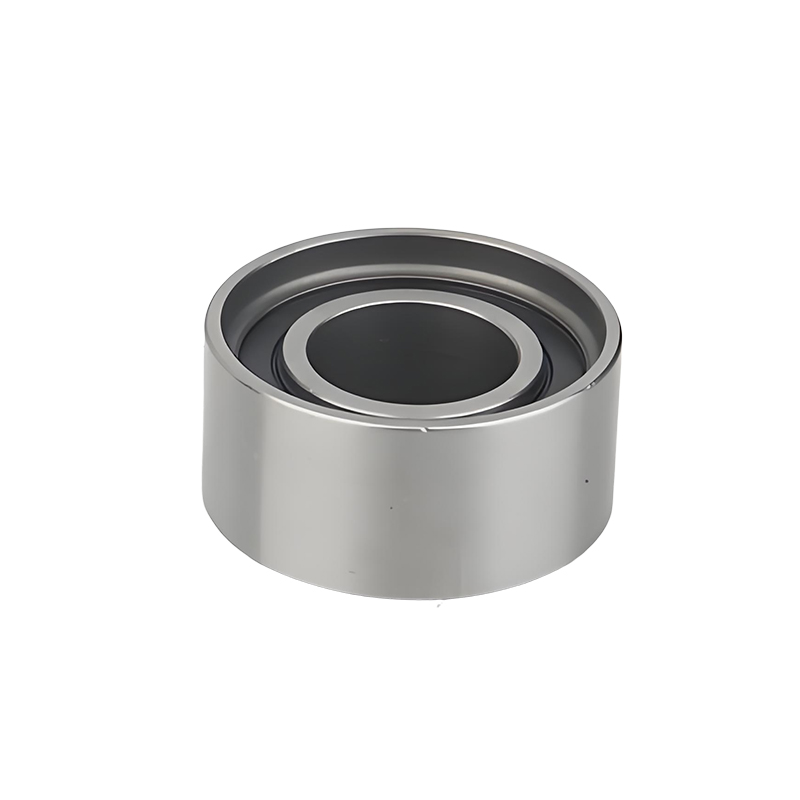
The non-standard bearings for automotive tightening wheels are customized bearings designed for special working conditions of tightening wheels. Their characteristics revolve around compact structure, enhanced sealing, high temperature and high load resistance, and customized adaptability. The specifics are as follows:
1. Compact structure, suitable for limited space
Customized size: Customize the outer diameter, inner diameter and width according to the size of the tightening wheel hub and shaft to ensure close cooperation with the wheel body and reduce installation clearance. For example, the Xiali N5 air conditioning tightening wheel bearing adopts a non-standard size with a center hole of about 25 mm, an outer diameter of 42 mm and a thickness of 12 mm, which is incompatible with standard bearings.
Narrow width design: On the premise of meeting load requirements, reduce the bearing width as much as possible to adapt to the compact installation space in the engine compartment.
Special-shaped cage: It uses engineered plastic or metal stamping cage, and the structure may be asymmetrical design, optimize the distribution of rolling elements and the flow of lubricating oil to improve operational stability.
2. Strengthen sealing to adapt to harsh environments
Double-lip or triple-lip sealing ring: The inner and outer lips block the leakage of external dust and internal lubricating oil respectively, and the sealing life is long. For example, Wuzhou New Year automobile tensioner bearing adopts a three-lip medium-contact structure sealing ring, which combines high sealing performance and high-speed operation adaptability.
High temperature resistant grease: Use synthetic oil (base oil) + polyurea-based (thickening agent) grease, or high temperature and high viscosity grease, to solve the problem of grease leakage in high temperature environments and extend the life of the bearing.
3. Resistant to high temperature and high loads, adapting to complex working conditions
Material upgrade:
The ferrule uses high-purity special high-quality bearing steel (such as GCr15) to improve wear resistance and fatigue resistance.
The rolling elements are made of ceramic or high-carbon chromium steel to reduce the risk of deformation at high temperatures.
The wheel body is mostly made of high-strength aluminum alloy or engineering plastic to reduce weight while ensuring strength and reducing the impact of inertia on the transmission system.
Structural optimization:
Optimize the curvature of the outer ring channel and the raceway curvature of the inner ring to adapt to high-speed performance and axial squirming requirements.
The cage adopts structural engineering plastic with oil storage tank to increase lubrication capacity and reduce wear.
4. Custom adaptability to meet special needs
Non-standard characteristics: Customize the bearing size, installation structure or adjustment range according to the engine compartment space, belt layout or special working conditions (such as high torque, high frequency vibration). For example, some models need to customize the assembly that integrates bearings and iron columns, and replace the assembly directly instead of individual bearings.
Dynamic adjustment function: The rotation or sliding of the bearing drives the swing of the tightening wheel arm, and automatically compensates the elongation caused by wear, temperature changes or load fluctuations of the belt to ensure that the belt is always in a good tension state.
5. Long life and high reliability
Life expectancy: According to the tensioner test conditions, the life expectancy must be greater than 500 hours to meet the long-term and stable operation requirements.
Resistance to variable speed load capacity: The bearing is driven by belt transmission. The rotation speed, force direction and load size often change during operation. Non-standard bearings improve the resistance to variable speed load capacity through optimized design and material selection.