English

Views: 0 Author: Site Editor Publish Time: 2025-08-25 Origin: Site


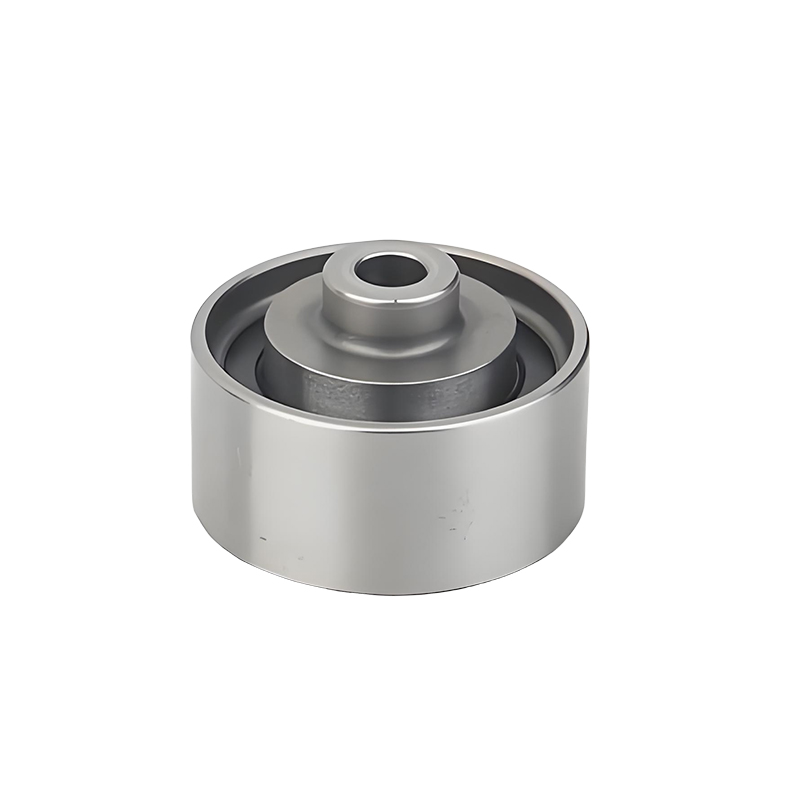
Tightening wheel bearings are key components used in automobiles and mechanical equipment to adjust the tension of transmission belts or chains. Their core function is to support the tightening wheels through the rotation of the bearings to ensure the stable operation of the transmission system. The following are the main features of tightening wheel bearings, which are analyzed in detail in combination with structure, performance, application scenarios, etc.:
1. Structural features: integrated and lightweight design
Bearing and wheel integration
Tightening wheel bearings usually integrate the inner ring, outer ring, rolling element (ball or roller) with the tightening wheel body to reduce the number of parts and reduce assembly difficulty.
Example: Automobile engine accessories belt tightening wheel bearing, the wheel body is directly used as the outer ring of the bearing, simplifying the structure.
Lightweight materials applications
The wheel body is mostly made of high-strength aluminum alloy or engineering plastic to reduce weight while ensuring strength and reducing the impact of inertia on the transmission system.
Bearing part: The inner and outer rings may use bearing steel (such as GCr15), and the rolling element is made of ceramic or high-carbon chromium steel to improve wear resistance.
Sealing and dustproof design
Both sides of the bearing are usually equipped with rubber seals or metal dust-proof covers to prevent leakage of dust, moisture and lubricant and extend service life.
Special design: Some high-end bearings adopt contact sealing, which has better sealing effect, but slightly greater friction.
2. Performance characteristics: high precision and durability
Low friction and high speed
There is rolling friction between the rolling element (ball or roller) and the raceway, with a low coefficient of friction (usually <0.002), suitable for high-speed rotation (speed up to thousands of revolutions per minute).
Comparison: The friction coefficient of sliding bearings is high (0.1-0.3), but the tightening wheel bearings significantly reduce energy consumption through rolling design.
High load-bearing capacity
The tightening wheel bearing needs to bear the radial tension (tension force) and axial impact force of the transmission belt. When designed, the load bearing capacity is improved by optimizing the raceway curvature and the number of rolling elements.
Dynamic load test: Typical bearings can withstand radial forces of 500-2000N, and some heavy-duty applications can reach more than 5000N.
Temperature and corrosion resistance
High temperature environment: The temperature in the engine compartment can reach above 120℃, and the bearings need to use high-temperature grease (such as polyurea grease) and heat-resistant materials (such as silicone rubber sealing ring).
Corrosion protection: Surface coatings (such as zinc coatings) or stainless steel materials can prevent corrosion of salt spray and chemicals.
Long life and maintenance-free
The design life of high-quality tightening wheel bearings can reach more than 100,000 kilometers (automatic applications), and the life of bearings for some industrial equipment exceeds 5 years.
Maintenance-free design: reduces regular maintenance needs through pre-filled grease and sealed structures.
3. Functional features: dynamic adjustment and stability
Automatic tension adjustment
The tensioning wheel bearing provides pretension through a spring or hydraulic device, so that the transmission belt always maintains proper tension and avoids slippage or excessive wear.
Dynamic response: When the engine speed changes, the bearing needs to quickly adapt to tension fluctuations and keep the transmission system stable.
Vibration reduction and noise reduction
Precision matching of the inner rolling elements of the bearing and the raceway reduces vibration and driveline noise (usually <60dB).
Special design: Some bearings use asymmetric raceways or damping materials to further suppress vibration.
Multi-directional stress adaptability
The tightening wheel bearing needs to bear radial and axial forces from the transmission belt. When designed, the multi-directional force capacity is enhanced through an angular contact structure or a double-row rolling element.
Example: Automobile timing belt tightening wheel bearings often use angular contact ball bearings, which can withstand radial and axial loads at the same time.
4. Application scenario characteristics: targeted optimization design
Automotive engine system
Accessories belt tensioning wheels: drive generators, air conditioning compressors, etc., which need to be compactly designed to adapt to the engine compartment space.
Timing belt tightening wheel: high-precision synchronization is required, and bearing clearance control is strictly controlled (usually <0.01mm).
Industrial transmission equipment
Conveyor belt tightening wheel: it needs to withstand heavy loads and frequent start and stops, and the bearing material and heat treatment process need to be strengthened.
Chain tightening wheels: Some applications use needle roller bearings to adapt to high linear velocities and impact loads.
Motorcycles and agricultural machinery
Small engine applications: The bearing size is smaller, but it needs to meet the needs of high speed and dust resistance, and the sealing design is more critical.