English

Views: 1 Author: Site Editor Publish Time: 2025-12-01 Origin: Site


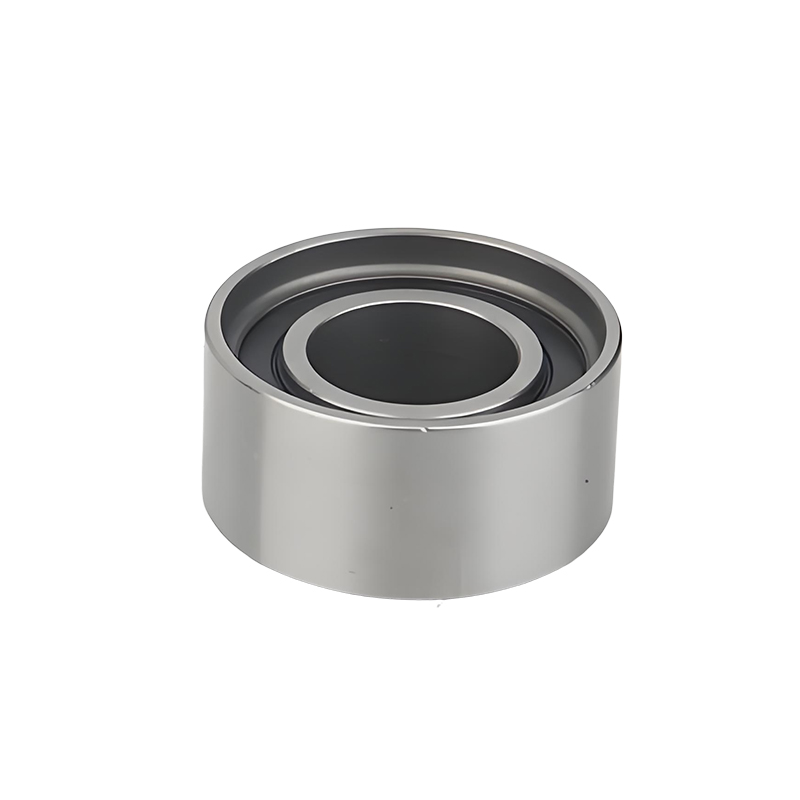
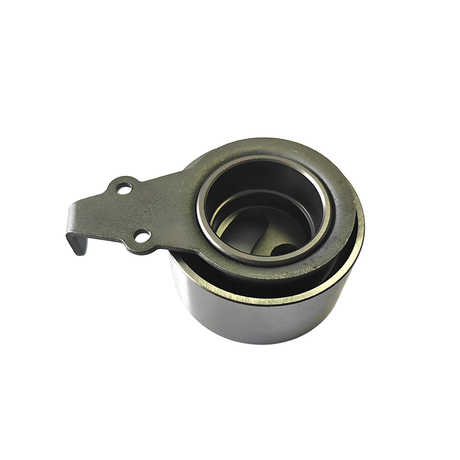
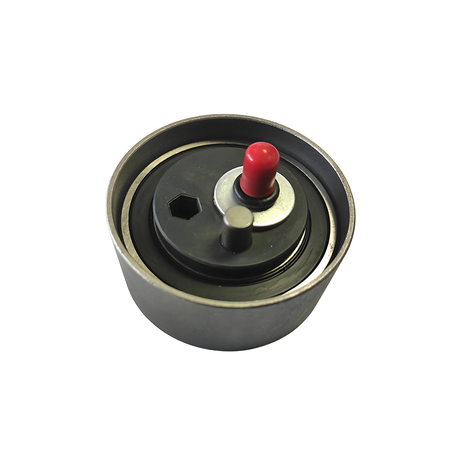
Non-standard bearings in automobile tensioners (if they refer to customized bearings for tensioners) play a core supporting and functional optimization role in the transmission system. Their functions can be summarized as the following key points:
1. Support the rotating body to ensure structural stability
Core function: As the core component of the tensioner pulley, the non-standard bearing directly supports the rotation of the wheel body and bears the radial load (such as belt tension) and axial load (such as lateral force when the belt deflects) generated by the belt drive.
Non-standard advantages: For the special structure of the tensioner wheel (such as compact design, special-shaped wheel body), non-standard bearings can achieve accurate cooperation with the wheel body by customizing the inner/outer diameter, width or channel curvature, and avoid looseness or jamming caused by standard bearings due to size mismatch.
2. Reduce friction and improve transmission efficiency
Rolling friction replaces sliding friction: Non-standard bearings convert the sliding friction between the belt and the wheel body into rolling friction through the rolling motion of rolling elements (such as steel balls or rollers), and the friction coefficient is significantly reduced (can be reduced to 1/50~1/100 of sliding friction).
Non-standard optimization: For high-speed operation (such as engine timing system) or heavy-load scenarios (such as industrial belt transmission), non-standard bearings can use low friction coefficient materials (such as ceramic rolling elements) or special lubrication methods (such as solid lubricating coatings) to further reduce energy loss.
3. Ensure rotation accuracy and reduce vibration and noise
Precision control: Non-standard bearings can be customized to high-precision grades (such as P4, P2). By controlling parameters such as inner/outer diameter tolerances and rotation accuracy, the radial runout and axial movement of the tensioner wheel are minimal when rotating at high speed, thereby maintaining the stability of the belt transmission.
Noise reduction effect: High-precision bearings can reduce belt jitter caused by wheel eccentricity or vibration, and reduce transmission system noise (for example, engine timing system noise can be reduced by 3~5dB).
4. Adapt to complex working conditions and extend service life
Environmental resistance: For high temperature (such as engine compartment), humidity (such as outdoor equipment) or corrosive environment (such as chemical equipment), non-standard bearings can be made of special materials (such as stainless steel, engineering plastics) or surface treatments (such as nickel plating, ceramic coating) to improve corrosion resistance and temperature resistance.
Impact resistance: In heavy loads or frequent starts and stops, non-standard bearings can improve impact resistance and avoid early failure by optimizing the cage structure (such as reinforced nylon cage) or rolling element arrangement (such as full complement roller design).
5. Customized design to meet special needs
Structural adaptation: Non-standard bearings can be customized according to the installation space of the tensioner (such as thin-walled bearings), transmission mode (such as synchronous belt transmission requiring low-noise bearings) or load characteristics (such as intermittent heavy loads requiring high fatigue life bearings).
Functional integration: Some non-standard bearings can be integrated with sealing structures (such as double-lip seals) or lubrication systems (such as grease reservoirs) to reduce the intrusion of external impurities, extend the lubrication cycle, and reduce maintenance frequency.
Application scenario examples
Automotive timing system: Non-standard bearings need to meet the requirements of high precision, low noise and high temperature resistance, ensure the synchronous transmission of the timing belt and the crankshaft and camshaft, and avoid engine valve top and other failures.
Industrial belt drive: Non-standard bearings need to withstand heavy loads and frequent starts and stops. The service life can be extended by customizing high load-bearing capacity designs (such as increasing roller diameter) and impact-resistant materials (such as carburized steel).
Automation equipment: Non-standard bearings need to adapt to compact installation spaces and achieve seamless integration with tensioners through thin-walled designs or special-shaped structures (such as flange bearings).