English

Views: 0 Author: Site Editor Publish Time: 2025-07-28 Origin: Site


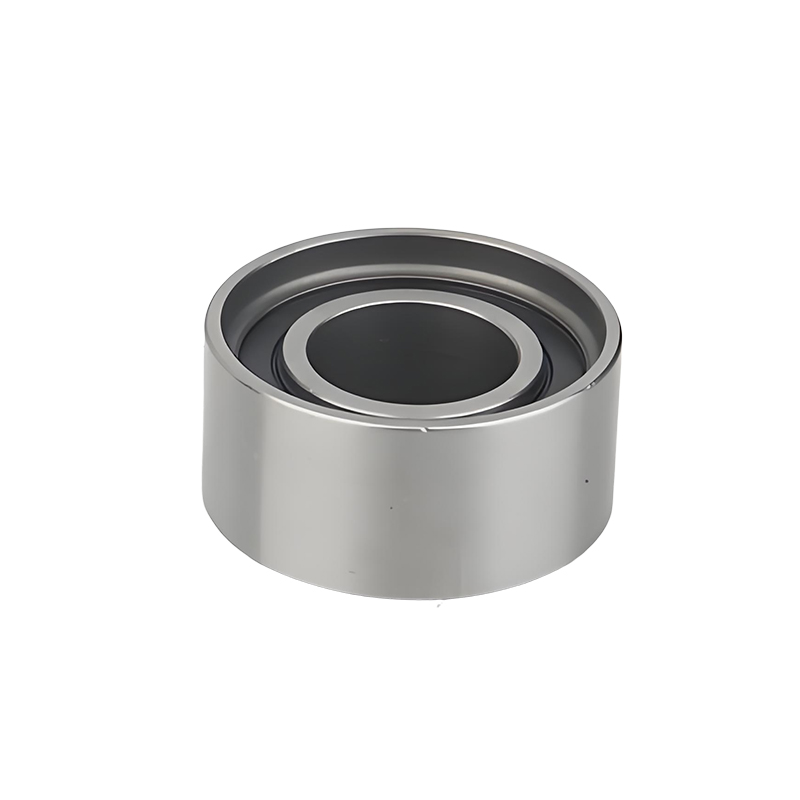
The non-standard bearing of the automobile tightening wheel is a key component in the tightening wheel system. It is responsible for adjusting the tension of the transmission belt and ensuring the normal operation of engine accessories (such as generators, air conditioning compressors, etc.). Since the size, material or performance of non-standard bearings differ from that of standard bearings, their operation and maintenance need to be more refined. The following are the detailed operation steps and precautions:
1. Operation steps
1. Preparation before installation
Tools and materials preparation special tools: bearing puller, press, torque wrench (accuracy ±5%), dial table.
Auxiliary materials: high-temperature grease (such as lithium-based grease, temperature resistance ≥120℃), detergent (such as carburetor cleaning agent), sealant (such as silicone sealant).
Protective equipment: gloves, goggles, dust masks.
Bearings and components inspection Bearing inspection: Appearance: No cracks, rust, peeling; the surface of the raceway and rolling elements is smooth, without pitting or scratches.
Dimensions: Use a micrometer to measure the inner diameter, outer diameter and width. The gap with the tightening wheel shaft and the housing must meet the design requirements (usually the gap is ≤0.05mm).
Clearance: Non-standard bearings may adopt special clearance design, and axial and radial clearances must be measured with a dial meter to ensure that they are within the technical specifications (such as C3 level clearance).
Tightening wheel inspection: The journal surface roughness Ra≤0.8μm, no wear or strain.
The housing installation surface is flat and has no deformation or burrs.
Clean and lubricate the bearings, shafts and shells thoroughly with detergents to remove impurities such as oil and metal chips.
Apply appropriate amount of grease to the contact surfaces of the bearing raceway, cage and seal ring (filled about 1/3-1/2 cavity).
2. Installation process
Bearing positioning and press-fitting thermal installation method (applicable to interference fit): Heat the bearing to 80-100℃ (use an induction heater or oil bath to avoid open flames), keep it in heat for 5-10 minutes to expand evenly.
Quickly put the bearing into the journal and tap it with a press or copper hammer to the designed position (axial clearance ≤0.1mm).
Cold installation method (applicable to clearance matching): Use a press directly to press the bearing into the shaft journal, and the pressure direction must be consistent with the center line of the shaft to avoid deflection and deformation of the bearing.
Tightening wheel assembly Install the tightening wheel assembly with the bearing installed on the engine to ensure the bolt holes are aligned.
Tighten the fixing bolts twice with a torque wrench: First time: pre-tighten according to 50% of the technical specification torque (if the specified torque is 40N·m, twist it to 20N·m first).
Second time: Tighten (40N·m) at 100% torque and check whether the bolts are loose.
Install the transmission belt and adjust the tightening force to the specified value (measured with a spring scale, if the tension of the generator belt must be between 300-500N).
3. Debugging and testing
Static check to manually rotate the tightening wheel to check whether the bearing rotates flexibly, without any stagnation or abnormal noise.
Check whether the contact surface of the transmission belt and the tightening wheel are aligned and there is no biased grinding phenomenon.
Dynamic test starts the engine, run at idle for 5-10 minutes, and observe whether there is vibration or noise on the tightening wheel.
Accelerate to 2000-3000r/min and check the bearing temperature (measured with infrared thermometer, normal temperature ≤80℃).
Turn off the engine, check whether the fixing bolts are loose and whether the transmission belt tension is reduced (if the decrease is >10%, it needs to be readjusted).
2. Things to note
1. Installation phase
Avoid violent operation. It is forbidden to directly hit the inner or outer ring of the bearing with a hammer to prevent raceway deformation or cage damage.
During pressing, a copper sleeve or soft metal gasket must be placed on the end surface of the bearing to disperse the pressure.
It is necessary to prevent impurities from entering the installation environment (such as dust-free workshops) to prevent dust and sand from entering the inside of the bearing.
The grease must be sealed to prevent contamination.
Non-standard characteristics adapted to non-standard bearings may use special materials (such as ceramic hybrid bearings) or coatings (such as DLC coatings). It is necessary to confirm its compatibility with greases (such as certain coatings need to avoid sulfur-containing greases).
If the bearing design has pretension requirements, it is necessary to use special tools (such as hydraulic pretension devices) to accurately control it.
2. Use phase
Regular inspection and maintenance per 10,000 kilometers: Check the rotation flexibility of the tightening wheel bearings and clean the surface of oil stains.
Every 30,000 kilometers: Disassemble the tightening wheels and check the bearing clearance and grease status (replace if it dries or changes color).
Every 60,000 kilometers: Replace bearings (even if there is no abnormal wear, preventive replacement is required because the bearing fatigue life is limited).
Avoid extreme working conditions and prohibit long-term idle or overload operation (such as the engine speed is too high when trailing), and prevent the bearing from overheating.
Avoid not cleaning it in time after driving in muddy and wading roads to prevent moisture and impurities from corroding the bearings.
The non-standard bearing of the transmission belt may correspond to the specific transmission belt model (such as multi-wedge belts, synchronous belts), and compatibility needs to be confirmed.
When replacing the transmission belt, check the status of the tightening wheel bearings at the same time to avoid bearing overload due to belt aging.
3. Troubleshooting
If you hear an abnormal noise, if you hear a 'buzzing' sound (bearing raceway wears) or a 'click' sound (cage damages), you need to stop the machine and replace the bearing immediately.
Temporary noise removal by spraying lubricant is prohibited, which may cover up serious failures.
If the temperature is too high, if the bearing temperature is > 100℃, possible reasons include insufficient lubrication, overload or improper installation, and the machine needs to be shut down to check and replace the bearing.
If the transmission belt is worn or cracked, the axial clearance of the tightening wheel bearing may be too large, so the bearing needs to be adjusted or replaced.