English

Views: 0 Author: Site Editor Publish Time: 2025-07-30 Origin: Site


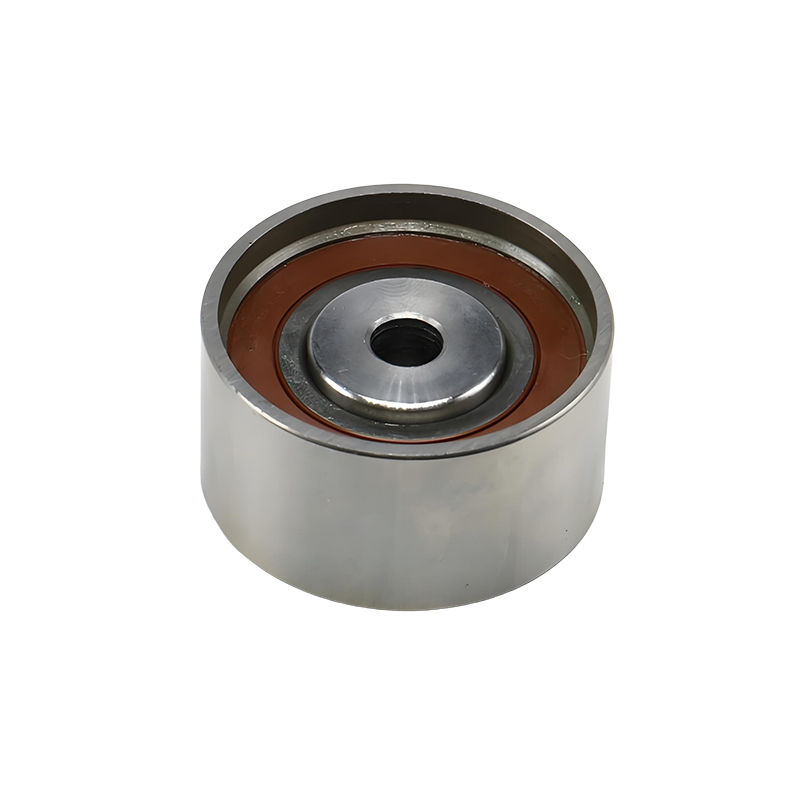
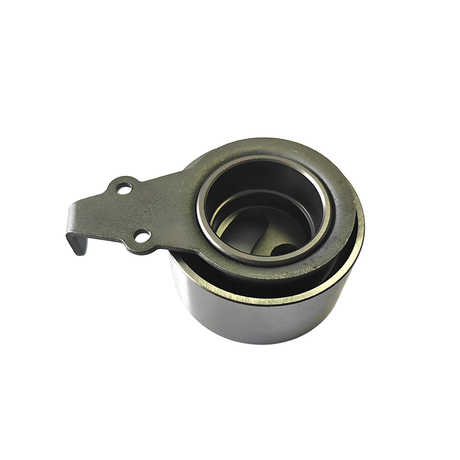
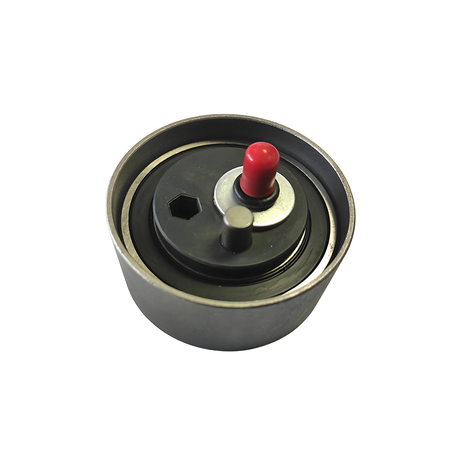
Special bearings for automobile tightening wheels are key components in the transmission system of automobile engine accessories. Their role and significance run through multiple levels such as engine operation stability, power transmission efficiency and vehicle reliability. The following analysis is carried out from four dimensions: structural principle, core role, technical significance and maintenance value:
1. Structural principles and work scenarios
Special bearings for tightening wheels are usually integrated into tightening wheel assembly and are composed of an outer ring, an inner ring, a rolling element (steel ball or roller), a cage and seals. Its installation location is located in the front-end accessory drive (FEAD) system and is bolted to the engine block or bracket, in close contact with the multi-wedge belt/timing belt. When the engine is running, the belt transmits power between the crankshaft pulleys, air conditioning compressors, generators and other accessories. The tensioning wheel bearings apply pretension force through elastic elements (such as springs) to keep the belt constant tension.
2. Analysis of core roles
1. Dynamic tension adjustment to prevent belt slipping
Belt tension control: When the engine speed changes (such as rapid acceleration and idle speed), the belt length will cause slight deformation due to thermal expansion, contraction or load fluctuations. The tightening wheel bearing is rotated and matched with the spring's elastic potential energy, and adjusts the belt tension in real time to ensure that sufficient friction is maintained between the belt and the pulley, avoiding power loss or accessories failure caused by slippage.
Data support: Experiments show that when the belt tension fluctuates more than ±10%, the generator charging efficiency decreases by 15%, the air conditioner compression mechanism cooling capacity is reduced by 20%, and the tension wheel bearing can control the tension fluctuation within ±3%.
2. Vibration attenuation to reduce system noise
Damping effect: The slight elastic deformation between the roller element and the raceway inside the bearing can absorb high-frequency vibration in the belt transmission. Combined with the shock absorption function of the rubber seal, the system noise is reduced by 3-5 decibels (dB).
Case comparison: After a certain model replaced the tightening wheel bearing, the engine compartment noise dropped from 72dB to 68dB, and the noise perception in the cockpit was significantly weakened.
3. Extend life and protect key components
Belt protection: If the belt tension is insufficient, it will cause sliding friction between the belt and the pulley, accelerating the belt wear (the life is shortened by more than 50%); excessive tension may cause the belt to break or the pulley shaft to bend. The tightening wheel bearing extends the belt life to more than 80,000 kilometers by precisely controlling tension (the life of ordinary belts is about 50,000 kilometers).
Accessories protection: Stable tension can prevent air conditioning compressors, water pumps and other accessories from air conditioning compressors, water pumps and other accessories from belt slippage, reducing the risk of bearing damage.
4. Adapt to multiple operating conditions and improve system compatibility
Temperature adaptability: The engine compartment temperature can reach above 120℃. The tightening wheel bearing adopts high-temperature resistant grease (such as polyurea grease) and a special sealing structure to ensure stable operation within the range of -40℃ to 150℃.
Load adaptability: By optimizing bearing stiffness (such as double-row angular contact ball bearings), it can withstand additional tension fluctuations when the generator is fully loaded (such as night driving + air conditioning on).