English

Views: 0 Author: Site Editor Publish Time: 2025-07-14 Origin: Site


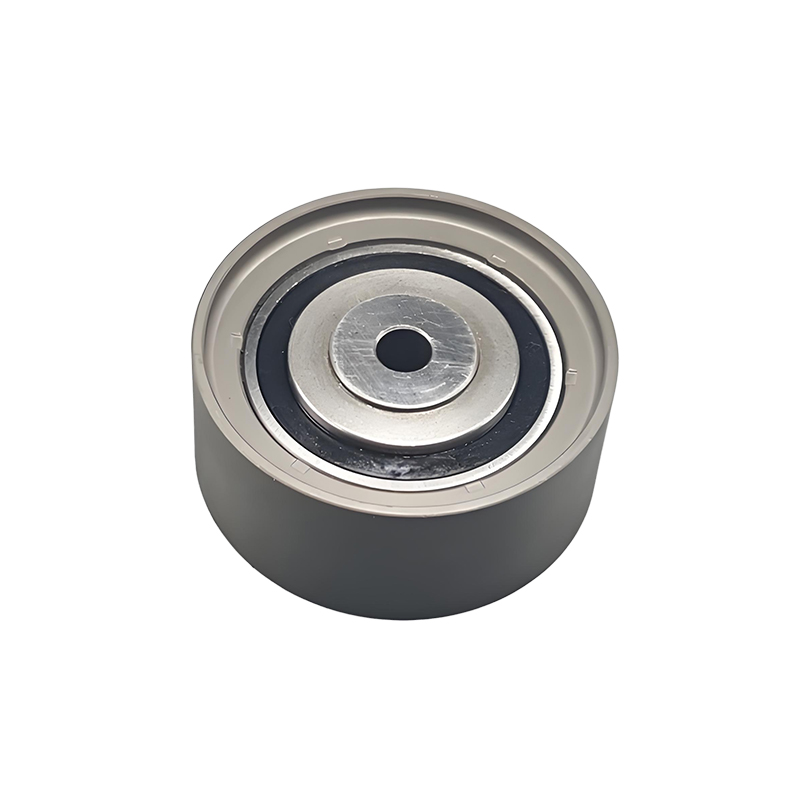
The automobile tightening wheel is a key component in the engine timing system or accessories transmission system. Its core function is to dynamically adjust the tension of the belt or chain to ensure stable and efficient operation of the transmission system, while extending the service life of related components. The following is an analysis of its specific functions and technical details:
1. The core function of the tightening wheel
1. Maintain constant tension of belt/chain
Prevent slippage:
When the engine is running, the belt or chain will relax due to temperature changes, wear or load fluctuations. The tightening wheel automatically adjusts its position through spring or hydraulic pressure, and always maintains the friction between the belt and the drive wheel (such as crankshaft pulley and camshaft timing wheel) to avoid power loss or timing misalignment caused by slippage.
Reduce vibration:
A loose belt can produce periodic vibrations, causing noise and accelerating bearing wear. The elastic design of the tightening wheel can absorb vibration energy and make the transmission more stable.
2. Compensating for component wear and thermal expansion
Automatic compensation:
The belt will stretch after long-term use, and the metal chain will become loose due to wear. The tightening wheel automatically compensates these gaps through the continuous pressure of the built-in spring or hydraulic piston without manual adjustment.
Adapt to temperature changes:
When the engine starts coldly, the belt/chain shrinks; when running at high temperatures, expands. The elastic elements of the tightening wheel can adapt to this thermal expansion and contraction to avoid overload or insufficient tension.
3. Protect the drivetrain components
Prevent belt breakage:
An overly tight belt will increase friction heat, causing the belt glue layer to age or the fibers to break; if it is too loose, it may break away from the wheel groove. The tensioning wheel maintains the belt stress within a safe range by precisely controlling the tension.
Extend bearing life:
Slipped belts or uneven tension will cause the wheel system to be loaded, accelerating the wear of the bearings of accessories such as water pumps and generators. The tightening wheel can balance the load and reduce the failure rate.
2. Types and structure of tightening wheels
1. Mechanical spring-type tightening wheel
structure:
It consists of a base, swing arm, pulley and torsion spring. The spring applies pressure to the pulley through the swing arm to maintain tension on the belt.
Features:
Simple structure and low cost, suitable for low load transmission systems (such as generators, air conditioning compressor belts). However, the spring force changes with stroke, and the tension control accuracy is low.
2. Hydraulic automatic tightening wheel
structure:
Added hydraulic damping system on the basis of mechanical type, including high-pressure chamber, low-pressure chamber and throttle valve. The hydraulic oil flows through the throttle hole to generate damping force, making the tightening wheel move smoother.
Features: Fast dynamic response: It can instantly absorb sudden changes in belt tension (such as load shock during acute acceleration).
Stable tension: The damping force offsets the fluctuations in the spring force, making the belt tension more constant.
Long life: Hydraulic oil lubrication reduces component wear and is suitable for high-load timing chain systems.
3. Electromagnetic control tightening wheel (emerging technology)
structure:
The pressure of the hydraulic system is adjusted by an electromagnet to achieve active tension control. Some models are used for belt transmission of hybrid systems to adapt to the frequent start and stop of the motor.
3. Typical application scenarios
1. Timing system (chain drive)
effect:
In the transmission of the air distribution timing chain, the hydraulic tightening wheel ensures that the chain is closely engaged with the crankshaft timing gear and the camshaft timing gear to prevent serious failures such as the engine top valve caused by timing jumps.
Case:
The Volkswagen EA888 engine uses hydraulic tightening wheels and chain rails to achieve a maintenance-free design of the timing system.
2. Accessory transmission system (Belt transmission)
effect:
In the belt transmission of the drive generator, air conditioning compressor, water pump and other accessories, the tensioning wheel maintains the tension of the multi-wedge belt or snake belt to ensure that each accessories work normally.
Case:
The automatic tightening wheels of Toyota Corolla engine can simultaneously adjust the tension of the generator and air conditioning compressor belts.
4. Fault phenomenon and impact
1. Common manifestations of damage to tightening wheels
Abnormal noise:
Bearing wear or spring failure will cause the tightening wheel to rotate unsteadily, making a 'squeak' or 'cuckoo'.
Belt Offset:
Deformation of the swing arm of the tightening wheel or wear of the pulley will cause the belt to deviate and the edge wear will intensify.
Engine fault light on:
The failure of the timing chain tightening wheel may cause timing misalignment, triggering the ECU alarm.
2. Potential risks
Belt breakage:
Loss of tension may directly lead to belt breakage, causing engine shutdown or accessories failure (such as water pump shutdown causing engine overheating).
Timing jumps:
A fault in the chain tightening wheel may cause the air distribution phase to be disorganized, causing the valve to collide with the piston (top valve).
5. Maintenance and replacement suggestions
1. Regular inspection
Mileage interval:
It is recommended to check the tightening wheel status every 60,000 to 100,000 kilometers (refer to the model manual for details).
Check item: Belt tension (measured with a tension gauge).
The swing flexibility of the tightening wheel (manually rotate the pulley, there should be no jam or excessive gap).
Belt wear (observe cracks or glue layer falls off).
2. Replacement principle
Synchronous replacement:
If you replace the belt, you need to replace the tightening wheel and idler wheel (guiding wheel) at the same time, because the springs of the old tightening wheel are tired and the tension of the new belt cannot be guaranteed.
Original accessories:
Choose tightening wheels that match the model to avoid early failure due to mismatch in size or tension curves.
6. Technology development trends
Lightweight design:
High-strength plastic or aluminum alloy base is used to reduce the inertia of the tightening wheel and reduce energy consumption.
Integrated sensors:
Some high-end models integrate tension sensors in the tightening wheels to monitor the belt status in real time and feed back to the ECU through the CAN bus.
Long-life materials:
Use ceramic bearings or self-lubricating coatings to extend the life of the tightening wheel to more than 200,000 kilometers.
Summarize
The car tightening wheel is the 'tension housekeeper' of the transmission system. By dynamically adjusting the belt/chain tension, the stability and reliability of the engine power transmission are ensured. Its performance directly affects engine life, fuel economy and driving safety. Regular maintenance and timely replacement of tightening wheels are key measures to avoid transmission system failures and reduce maintenance costs. With the development of materials science and intelligent control technology, the tightening wheel will evolve in a more efficient and durable direction in the future.