English

Views: 0 Author: Site Editor Publish Time: 2025-11-22 Origin: Site


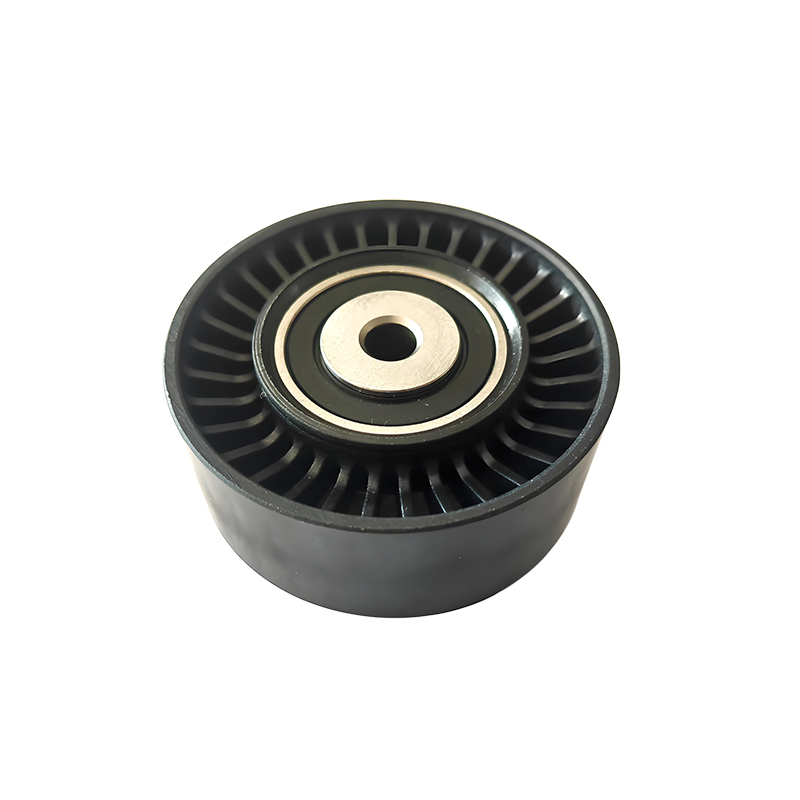
Special non-standard bearings for automotive tensioners are customized bearings designed specifically for automotive tensioners. Their functions are closely related to the overall function of the tensioners. They are mainly responsible for key tasks such as supporting, transmitting power, maintaining tension, and adapting to complex working conditions. The following is an analysis of specific functions:
1. Support the rotation of the tensioning wheel
Core support function: The tensioner wheel is installed on the engine or transmission system bracket through bearings. As a rotating component, the bearing directly bears the radial load (such as belt tension) and axial load (such as vibration and impact) of the tensioner wheel, ensuring that the tensioner wheel rotates smoothly.
Advantages of non-standard design: Non-standard bearings can be customized in size, shape and installation method according to the special structure of the tensioner wheel (such as special-shaped hub, asymmetric mounting holes, etc.) to ensure a perfect match with the tensioner wheel and avoid wear or looseness caused by incompatibility of standard bearings.
2. Transmit power and reduce friction
Power transmission hub: The tensioner is connected to the engine crankshaft, generator, air conditioning compressor and other components through belts. As a key node in power transmission, bearings must have low friction and high efficiency characteristics to ensure smooth power transmission and reduce energy loss.
Non-standard material optimization: Non-standard bearings may use special materials (such as high-carbon chromium steel, ceramic hybrid materials) or surface treatments (such as chromium plating, nitriding) to improve wear resistance, corrosion resistance and high-temperature stability, and adapt to the high temperature and oily environment in the engine compartment.
3. Maintain belt tension
Tension adjustment: The tensioning wheel applies constant tension to the belt through a spring or hydraulic device to prevent the belt from slipping or slacking. The rotation accuracy of the bearing directly affects the stability of the tension force. Non-standard bearings may reduce clearance by optimizing the internal structure (such as precision raceways and high-rigidity cages) to ensure long-term stability of the tension force.
Dynamic response capability: When the engine speed changes, the tensioner needs to quickly adjust the belt tension. Non-standard bearings may be designed with a low-inertia structure to reduce the moment of inertia, improve the dynamic response speed of the tensioner, and avoid instant slippage of the belt.
4. Adapt to complex working conditions
High temperature resistance: The temperature in the engine compartment can reach over 120°C. Non-standard bearings may use high-temperature resistant grease or seal design to prevent lubrication failure or foreign matter intrusion and extend service life.
Anti-vibration and impact: When the car is driving, the tensioner will be affected by engine vibration and road impact. Non-standard bearings may improve impact resistance by enhancing cage strength and optimizing roller arrangement to avoid bearing damage or belt fall-off.
Compact design: In order to save space, non-standard bearings may adopt thin-walled structures or integrated designs (such as integrated molding with tensioner wheel hubs) to meet the lightweight and miniaturization needs of automobiles.
5. Reduce noise and vibration
Silent design: Non-standard bearings may reduce friction and vibration during rotation, reduce engine compartment noise, and improve driving comfort by optimizing the surface roughness of the raceway, using a low-noise cage or a special lubrication method.
Balance optimization: For high-speed rotating tensioners, non-standard bearings may undergo dynamic balance correction to avoid vibration and noise caused by imbalance.
6. Extend service life and reliability
Customized life design: Based on vehicle usage scenarios (such as urban commuting, long-distance transportation) and maintenance cycles, non-standard bearings can have customized life levels to ensure that they do not need to be replaced during the vehicle life cycle and reduce maintenance costs.
Fault warning function: Some high-end non-standard bearings may integrate sensors (such as temperature and vibration sensors) to monitor the bearing status in real time and provide early warning of potential faults to avoid belt breakage or engine damage caused by tensioner failure.
Typical application scenarios
Engine timing system: Ensure stable tension of the timing belt or chain to prevent collision between the engine intake and exhaust valves and the piston.
Accessory drive system: Provides stable power transmission for accessories such as generators, air conditioning compressors, water pumps, etc. to avoid functional failure due to belt slippage.
Hybrid/electric vehicles: In systems driven by electric compressors or high-voltage motors, non-standard bearings need to adapt to higher speeds and harsher electromagnetic environments.