English

Views: 0 Author: Site Editor Publish Time: 2025-12-11 Origin: Site


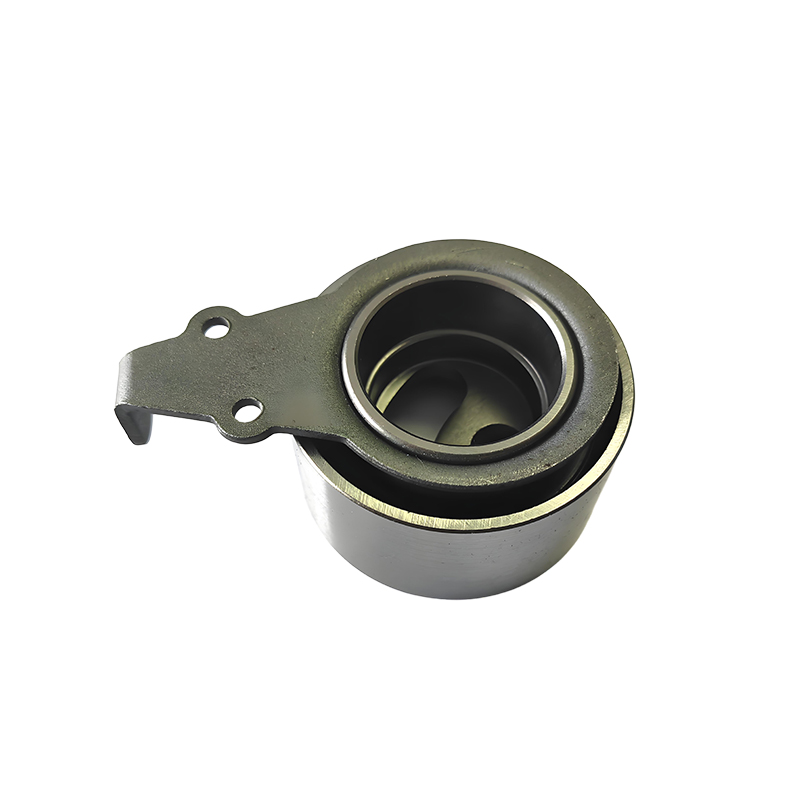
Automotive tensioner bearing seals have both tight contact (contact seal) and light contact (non-contact seal) designs. The specific choice depends on the working conditions. The following is a detailed analysis of the two sealing methods:
Contact seal (tight contact)
Principle: A rubber or polymer sealing ring is used to closely contact the inner or outer ring of the bearing to form a gap-free sealing structure.
Features:
Good sealing: It can effectively prevent liquid, moisture and solid particles from entering the bearing, and is suitable for use in harsh environments.
High friction: Due to the direct contact between the seal and the mating part, friction and heat will be generated during rotation, which can easily cause lubrication problems, and the contact surface is easy to wear, resulting in a decrease in sealing effect.
Applicable working conditions: Mainly suitable for medium and low-speed working environments. At the same time, the surface hardness of the shaft in contact with the seal is required to be greater than 40HRC, and the surface roughness Ra must meet certain standards.
Application scenario: In automotive tensioner bearings, contact seal designs are often used in situations with high sealing performance requirements, such as high humidity, dust or chemically corrosive environments.
Non-contact sealing (light contact)
Principle: There is a gap between the seal and the inner or outer ring of the bearing to reduce friction and achieve non-contact sealing.
Features:
Low friction: almost no frictional heat is generated during bearing rotation, and the sealing cover has no wear, so it is suitable for high-speed rotation conditions.
The sealing effect is relatively weak: Although the smaller the gap, the better the sealing effect, but compared with the contact seal, its ability to block the entry of contaminants is slightly weaker.
Applicable working conditions: Mainly suitable for high-speed and high-temperature working environments, such as automobile engines and other high-speed running parts.
Application scenario: In automotive tensioner bearings, non-contact sealing designs are often used in situations where the rotation speed is high and the sealing performance is relatively low. For example, some long-life non-contact labyrinth seal tensioner bearings use a non-contact labyrinth seal structure and a seal chamber composed of an outer retaining ring and an inner retaining ring, which can effectively prevent the loss of lubricant inside the bearing and prevent dust or impurities from entering the inside of the bearing.
Basis for choosing sealing method
Working environment: Water-resistant sealing is required for high-humidity environments, high-temperature-resistant sealing materials are required for high-temperature working conditions, and labyrinth sealing is recommended for dusty environments.
Speed and load: Contact sealed bearings are recommended for low-speed and heavy-load scenarios, while non-contact sealed bearings are more suitable for high-speed and light-load scenarios.
Sealing performance requirements: Contact seals should be preferred in situations with extremely high sealing performance requirements (such as chemically corrosive environments), while non-contact seals can be used in situations with higher speed requirements and relatively loose sealing requirements (such as high-speed engine running parts).