English

Views: 0 Author: Site Editor Publish Time: 2025-08-22 Origin: Site


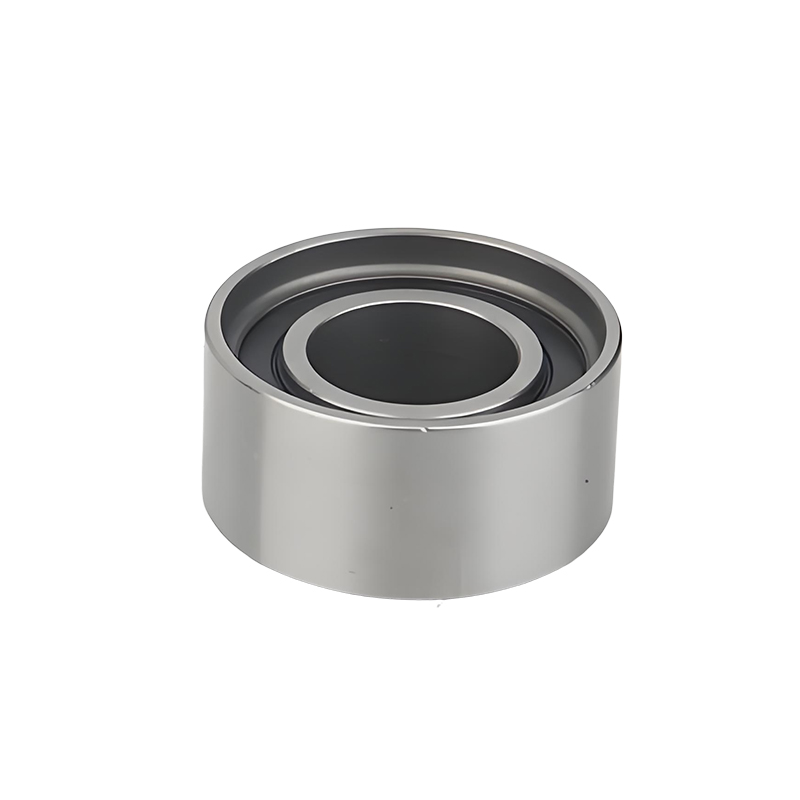
Non-standard automotive tightening wheel bearings are key components used to adjust belt tension in automotive engines or transmission systems. Their designs are usually customized to be developed according to specific vehicle models, working conditions or performance requirements (different from standard parts). The following are its core uses and detailed descriptions:
1. Core function: Maintain stable operation of the belt system
Dynamically adjust belt tension
Function: Through the rotation or sliding of the bearing, the tightening wheel arm is driven to swing, and the elongation of the belt due to wear, temperature changes or load fluctuations is automatically compensated to ensure that the belt is always in the optimal tension state.
Non-standard characteristics: Customize the bearing size, installation structure or adjustment range according to the engine compartment space, belt layout or special working conditions (such as high torque, high frequency vibration).
Application scenarios:
Engine timing belt system: prevents belt slipping and causing dislocation of air distribution (such as top valve accidents).
Accessories drive belt system (such as generators, air conditioning compressors, water pumps): Avoid belt slipping or breaking, and ensure that the accessories work normally.
Buffer vibration and impact
Function: The bearing is built-in damping structure (such as rubber bushings, spring shock absorbers) or special materials (such as high elastic alloys) to absorb vibration and impact in belt transmission, reduce noise and extend belt life.
Non-standard characteristics: Optimize damping coefficient or material formula for special vibration environments of hybrid models, high-performance vehicles or off-road vehicles.
Application scenarios:
Hybrid model: The belt load suddenly changes when the motor and the engine are switched, and it needs to respond quickly to vibrations.
Off-road vehicle: The rugged road surface causes the engine to shake violently, requiring high impact resistance bearings.
2. Typical application scenarios of non-standard design
Space-constrained engine compartment
Problem: The engine compartment layout of compact cars or electric vehicles is compact, and the standard tightening wheel bearings cannot be installed.
Non-standard solution:
Reduce the outer diameter or thickness of the bearing (such as from standard 30mm to 25mm).
Change the installation method (such as changing from bolt fixation to snap-on or embedded).
Case: The motor drive system of Tesla Model 3 uses flat tightening wheel bearings to adapt to the narrow space under the battery pack.
High load or high speed operating conditions
Problem: The belt drivetrain of high-performance cars (such as sports cars) or commercial vehicles (such as heavy trucks) has a large load and high speed, and the standard bearings are prone to wear or fail.
Non-standard solution:
Upgrade bearing materials (such as high carbon chrome steel or ceramic ball bearings).
Increase the number of bearing raceways or optimize contact angles (such as from standard 15° to 25° to improve load-bearing capacity).
Case: The engine timing system of Porsche 911 uses high-precision tightening wheel bearings, supporting speeds exceeding 8000rpm.
Special environment adaptability
Problem: Extreme climates (such as high cold, high temperatures) or corrosive environments (such as coastal areas) lead to a shorter life of standard bearings.
Non-standard solution:
Surface treatment: galvanized, dacrocoal coating or ceramic coating (corrosion resistance is increased by 3-5 times).
Sealing structure: Use double-lip seal or maze seal (dust and waterproof grade up to IP67).
Case: Trucks used in the Arctic use low-temperature grease and specially sealed tightening wheel bearings to ensure normal operation at -40°C.