English

Views: 0 Author: Site Editor Publish Time: 2026-04-21 Origin: Site


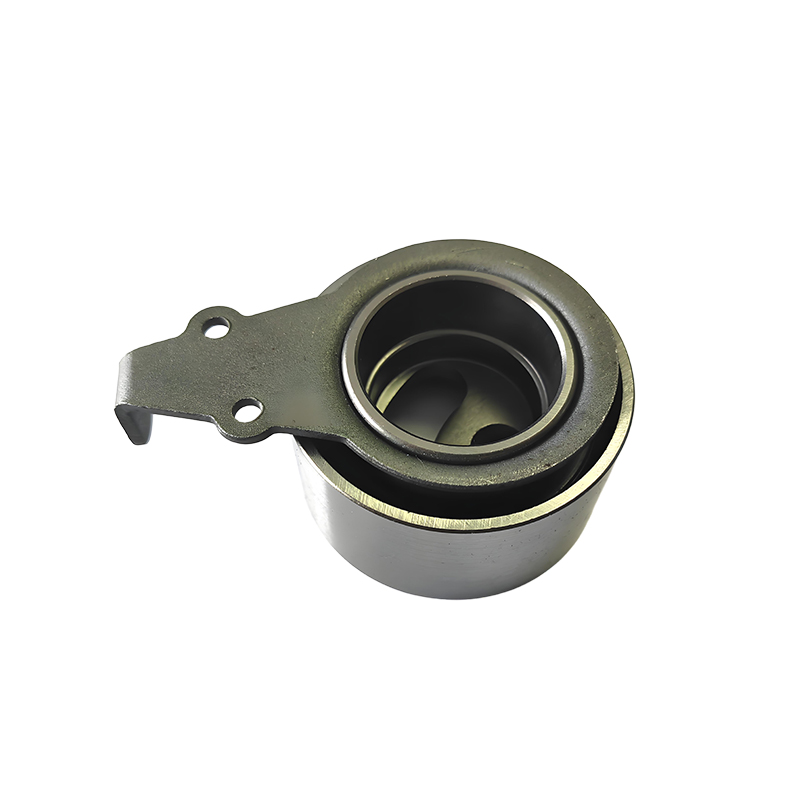
Through customized design, non-standard automotive tensioner bearings have shown significant advantages in terms of adaptability, performance optimization, structural innovation and adaptability to special working conditions. The specific advantages are as follows:
1. Accurately adapt to special models or working conditions
Solve space constraints: Non-standard bearings can be adjusted in size (such as reducing the outer diameter or thickness) according to the compact layout of the engine compartment, adapting to mini cars or special-structure models. For example, a certain mini car integrates the half-shaft washer and the inner ring of the wheel hub bearing to save space and reduce assembly complexity.
Matching non-standard belt parameters: According to the belt length, tension angle or transmission power requirements of a specific vehicle model, non-standard bearings can adjust parameters such as wheel diameter, bearing load, etc. to ensure the accuracy of dynamic tension compensation. For example, the tensioner suitable for Chery M1 needs to meet the belt transmission power of 30kW and the high temperature environment of above 120℃.
2. Performance optimization and lifespan improvement
Material upgrade: Use high-fatigue strength alloy springs, ceramic bearings or high-temperature-resistant rubber wheel bodies to improve wear resistance and corrosion resistance. For example, the tensioner bearing adapted for Toyota Camry has a hardness of HRC60-65 after heat treatment and can withstand extreme temperatures from -40°C to 150°C.
Structural reinforcement: Reduce belt vibration and wear through double spring design, hydraulic damping mechanism or optimized wheel surface texture. For example, the matte anti-rust coating on the surface of a certain type of tensioner wheel body can extend the service life to more than 150,000 kilometers.
Dynamic response optimization: The non-standard design can adjust the preload force curve to avoid dynamic relaxation under cold start or high-speed working conditions. For example, the tensioner suitable for the Mercedes-Benz M274 engine was repaired through micro-cracks in the damping rubber, eliminating idle vibration and restoring a steady running sound.
3. Lightweight and integrated design
Material innovation: Some high-end models use a composite structure of plastic wheel bodies and steel bearings to reduce weight while ensuring strength, adapting to the trend of engine miniaturization.
Function integration: The electronic tensioner integrates a sensor to monitor the belt tension in real time and automatically adjust it by the ECU, improving the intelligence level of the transmission system. For example, some French cars use non-standard bearing designs to reduce gearbox operating noise by 3-5 decibels and extend the life of the gear set by more than 20%.
4. Adaptability to special environments
Enhanced corrosion resistance: The tensioners of cross-border export models need to pass the salt spray test (more than 96 hours), and use stainless steel bearings or double-lip seals to adapt to humid or salt spray environments. For example, models in Southeast Asia have extended service life through enhanced sealed bearings.
Improved impact resistance: In view of the frequent start and stop conditions of hybrid vehicles, non-standard bearings can optimize the uniformity of raceway hardness (within ±1HRC) and avoid local premature wear.
5. Cost and maintenance benefits
Reduce long-term maintenance costs: Although the initial cost of non-standard bearings is higher, their long life characteristics can reduce the frequency of replacement. For example, the tensioner suitable for Toyota RAV4 has a design life of 100,000 kilometers, reducing maintenance costs for car owners.
Simplified assembly process: Non-standard design can reduce the number of accessories (such as eliminating half-shaft spacers) and improve assembly efficiency. For example, after a certain miniature wheel hub bearing adopts a non-standard integrated design, the assembly time is shortened and the cost increase is limited.