English

Views: 0 Author: Site Editor Publish Time: 2025-08-14 Origin: Site


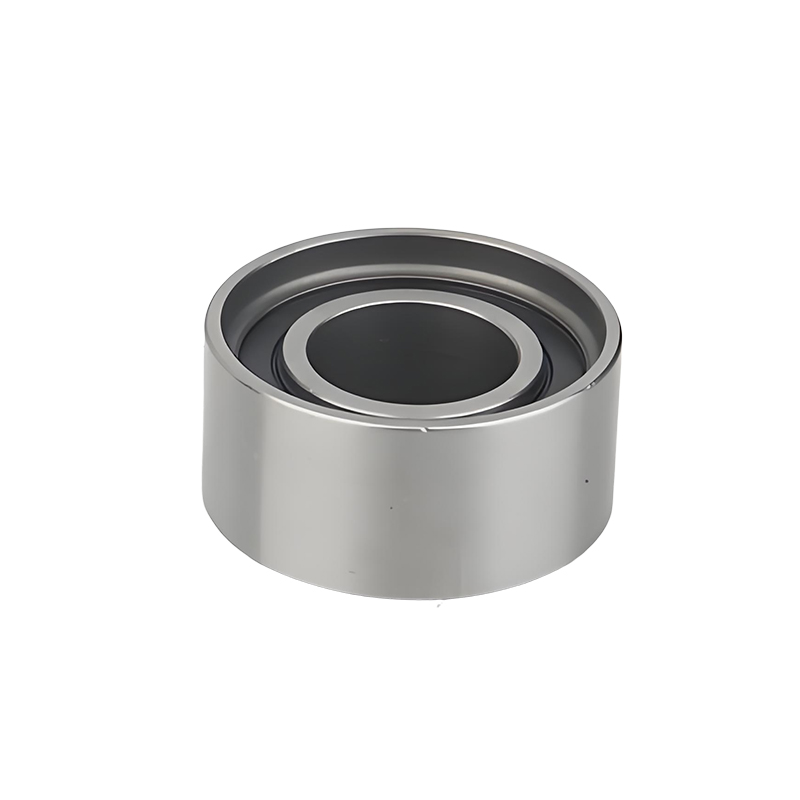
Automotive tightening wheel non-standard bearings are non-standard bearings designed for tightening wheels. Their size, material, structure or performance parameters are customized according to specific models, engine layout or usage conditions, and are different from general standard bearings. Its core applicable scenarios revolve around the special needs of the automotive transmission system. The following detailed analysis is from four dimensions: functional positioning, typical application scenarios, technical adaptability and industry trends:
1. Functional positioning: the core support of the tightening wheel system
The tightening wheel is a key component of the automobile transmission system (such as timing belts, accessories belts). Its function is to dynamically adjust the belt tension to ensure transmission efficiency and prevent slippage or breakage. As the core support of the tightening wheel, non-standard bearings must meet the following functional requirements:
High-precision rotation: reduces belt vibration and reduces noise (NVH optimization).
Impact load resistance: withstands the instantaneous impact force when the engine starts and accelerates rapidly.
Anti-wear performance: long-term and stable operation in high temperature, high speed and dust environments.
Compact structural design: adapts to the small space of the engine compartment, reduces weight and improves fuel economy.
2. Analysis of typical application scenarios
1. Timing system tightening round
Scenario features: The timing belt drives the camshaft, and the exhaust valve opening and closing time is required to be accurately synchronized, and the accuracy and reliability of the tightening wheel bearing are extremely high.
Non-standard adaptability:
Custom size: Adjust the bearing outer diameter, width or channel curvature according to the engine layout to ensure a perfect fit with the pulley.
High temperature resistance: Use high temperature resistant grease (such as polyurea grease) and special cage materials (such as glass fiber reinforced nylon) to adapt to high temperatures above 120℃ in the engine compartment.
Low friction design: optimize the raceway surface roughness (Ra≤0.1μm) to reduce belt transmission energy loss.
2. Attachment drive system tightening wheel
Scenario characteristics: drive generators, air conditioning compressors, water pumps and other accessories, and the belt tension needs to be dynamically adjusted to adapt to load changes.
Non-standard adaptability:
High load-bearing capacity: Increase axial and radial load-bearing capacity by increasing the bearing contact angle (such as from 15° to 25°) or increasing the number of rollers.
Dust-proof seal: Use a double-lip seal ring or a metal dust-proof cover to prevent dust and water vapor from invading and extend the service life (target ≥100,000 kilometers).
Lightweight design: Use an aluminum alloy cage or hollow roller to reduce the moment of inertia and increase the system response speed.
3. Hybrid/electric vehicle tightening wheels
Scenario features: The motor drive system has a higher speed (up to 15,000rpm), and requires frequent start and stop, posing new challenges to the dynamic performance and durability of the bearing.
Non-standard adaptability:
High-speed performance optimization: ceramic hybrid bearings (steel roller + ceramic cage) are used to reduce the influence of centrifugal force and increase the limit speed.
Low noise design: The laser micro-shaped raceway surface is formed to form an oil film to lubricate micro pits to reduce friction noise (target ≤55dB).
Electrical corrosion protection: Add an insulating coating to the inner and outer rings of the bearing to prevent electrical corrosion caused by the high-voltage electric field of the motor.
4. Vehicles in special working conditions (such as off-road vehicles, commercial vehicles)
Scene features: Frequent bumps, heavy loads or extreme temperature environments, requiring bearings to have stronger impact resistance and temperature resistance.
Non-standard adaptability:
Strengthening structure: Increase bearing preload (such as from 0.5kN to 1.2kN) to prevent the increase in the play caused by vibration.
Wide temperature lubrication: Use fully synthetic greases (such as lithium-based composite soap), and the working temperature range is extended to -40℃~+150℃.
Corrosion-resistant coating: Dacrotized or galvanized nickel alloy on the surface of the bearing to adapt to humid and salt spray environments.
3. Technical adaptability: the core advantages of non-standard design
Space optimization: By customizing the bearing profile (such as ultra-thin, special-shaped channels), adapting to the compact layout of the engine compartment to avoid interference with other components.
Performance matching: Adjust bearing materials (such as high-carbon chromium steel GCr15), heat treatment processes (such as bainite quenching) and clearance grade (such as C3/C4) according to the belt tension, speed, temperature and other parameters.
Cost control: For large-scale models (such as best-selling family cars), the structure is simplified through non-standard design (such as omitting unnecessary sealing rings) to reduce the cost of a single piece.
4. Industry trends and future scenarios
Electrochemical drive: With the increase in penetration rate of electric vehicles, tightening wheel bearings need to adapt to the motor's high speed and low noise requirements, and ceramic bearings and magnetic fluid sealing technologies will be gradually applied.
Intelligent integration: Some high-end models have begun to integrate sensors into tightening wheel bearings to monitor temperature, vibration and tension in real time. Non-standard designs require sensor installation space and signal transmission channels.
Modular supply: OEMs tend to purchase tightening wheel assembly (including bearings, wheel bodies, and springs) as modules. Non-standard bearings need to be designed in coordination with other components of the assembly to shorten the development cycle.
V. Selection and maintenance suggestions
Key parameters for selection:
Dynamic load (Cr): Need to be greater than the belt maximum tension × safety factor (usually 1.5~2.0).
Extreme speed (nlim): Need to be higher than the maximum engine speed × 1.2 (considering vibration and temperature rise).
Operating temperature range: Cover the extreme operating conditions of the engine compartment (such as turbocharged models need to consider exhaust heat conduction).
Maintenance precautions:
Check belt tension regularly (it is recommended to calibrate with a tension gauge every 20,000 kilometers) to avoid bearing overload.
Replace the tightening wheel bearings simultaneously when replacing the belt to prevent the belt from being worn or broken due to bearings.
Avoid using inferior grease to prevent high-temperature coking or low-temperature solidification from affecting the operation of the bearing.