English

Views: 0 Author: Site Editor Publish Time: 2025-09-03 Origin: Site


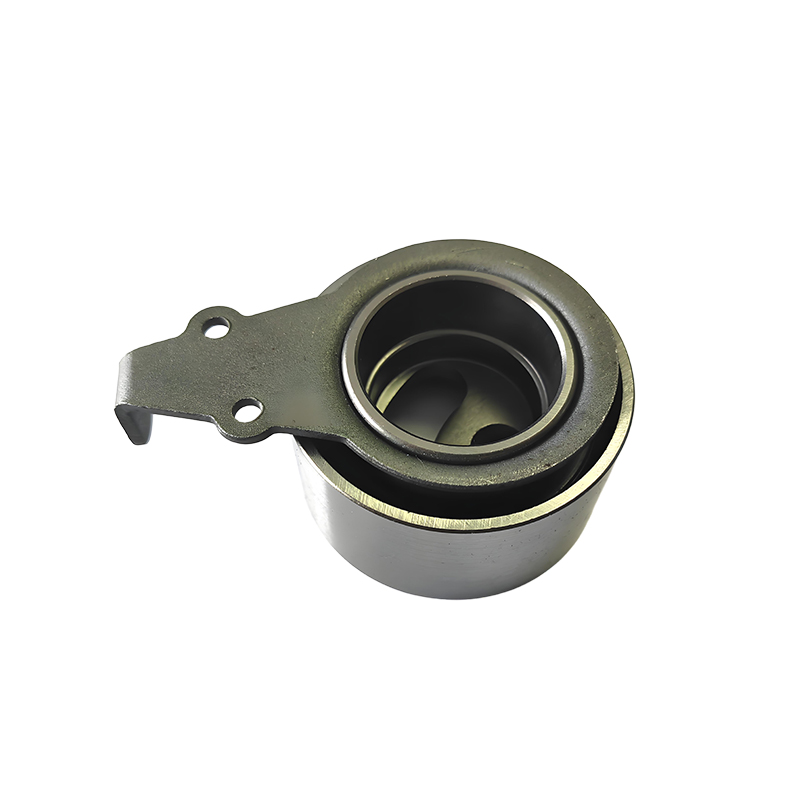
Automotive tightening wheel non-standard bearings are customized bearings designed for tightening wheels. Their characteristics revolve around the special working conditions of tightening wheels (such as high load, high frequency vibration, space limitation, etc.), and there are significant differences from standard bearings in terms of structure, materials, performance and adaptability. The following are the core features of non-standard bearings for automobile tightening wheels:
1. Structural features: compactness and high integration
Customized size design
Non-standard outer diameter/inner diameter: Customized according to the size of the tightening wheel hub and shaft to ensure that the bearing and the wheel body are closely matched and reduce installation clearance.
Narrow width design: On the premise of meeting load requirements, reduce the bearing width as much as possible to adapt to the compact installation space of the tightening wheels (such as in the engine compartment).
Special-shaped cages: Used with engineered plastic or metal stamped cages, which may be designed in asymmetrical structures to optimize rolling element distribution and lubricating oil flow.
Strengthened sealing system
Double-lip sealing ring: The inner and outer lip mouths block the leakage of external dust and internal lubricating oil, and the sealing life is 30%-50% longer than that of standard bearings.
Metal dustproof cover: Add a metal cover plate to the outside of the sealing ring to prevent large particles from entering, especially in dusty environments (such as the tightening wheels of off-road vehicles).
Labyrinth seal: The complex groove structure forms a tortuous path, further improving dust and waterproof performance (IP65 or above).
Preload adjustable structure
Elastic pretension device: Some non-standard bearings have built-in springs or corrugated washers, which can automatically compensate for the axial clearance, maintain constant tension of the tightening wheel, and reduce wear caused by belt slack or excessive tightness.
Thread adjustment mechanism: The external thread cooperates with the tightening wheel housing, allowing manual adjustment of the bearing axial position to accurately control belt tension (suitable for maintenance scenarios).
2. Material characteristics: high strength and fatigue resistance
Bearing steel upgrade
High carbon chromium bearing steel (GCr15): has carbon content of more than 1.0%, and its hardness after quenching reaches HRC60-65. Its pitting and wear resistance is better than ordinary bearing steel.
Carburized steel (such as 20CrMnTi): The surface carburized layer has a depth of 1.0-1.5mm, and the core remains tough, suitable for tightening wheels that withstand impact loads (such as engine accessories pulleys that frequently start and stop).
Stainless steel material: 304/316 stainless steel is used in wet or corrosive environments (such as the tightening wheel of the cooling system of new energy vehicle), and its salt spray corrosion resistance is increased by more than 5 times.
Rolling element optimization
Ceramic rolling element (Si₃N₄): The density is only 40% of the steel ball, the centrifugal force is reduced by 60%, and it can withstand higher speeds (such as the speed of the turbocharger tightening wheel reaches 15,000rpm).
Shape-tight roller: The surface of the roller is modified by logarithmic curve, reducing edge stress concentration, and extending the life by 2-3 times than that of standard rollers.
Surface treatment technology
Blackening treatment: A black oxide film is formed on the surface of the bearing to improve corrosion resistance and reduce friction coefficient (suitable for dry friction conditions).
DLC coating: Diamond-like carbon coating has a thickness of 2-3μm, a hardness of HV2000-3000, and a friction coefficient lowered below 0.05, significantly reducing wear.
Phosphate treatment: Form a phosphate film on the bearing surface to enhance the adsorption capacity of lubricating oil and reduce the starting friction torque.
3. Performance characteristics: adapt to extreme working conditions
High speed capability
Extreme speed enhancement: By optimizing the cage structure and lubrication method, the dn value of non-standard bearings (bearing inner diameter × speed) can reach 1.5×10⁶ mm·r/min, which is 30% higher than that of standard bearings.
Low noise design: Use super-finished raceway (surface roughness Ra≤0.05μm), the vibration acceleration level is reduced by more than 10dB, meeting the NVH requirements.
High temperature resistance
High temperature grease: Filled with polyurea or silicon-based grease, with a temperature resistance range of -40℃ to +180℃ to prevent grease loss or carbonization at high temperature.
Cooling structure: Some bearings are designed with heat dissipation oil tanks or heat conductors, which drive air flow through the rotation of the pulleys and reduce the bearing working temperature (such as the tightening wheels of hybrid vehicles).
Anti-pollution capability
Self-cleaning function: The cage is designed with tiny through holes, allowing a small amount of impurities to pass through and discharge out of the bearing to avoid clogging the lubricating passage.
Anti-micro wear: Coat molybdenum disulfide (MoS₂) solid lubricant on the contact surface to reduce the occurrence of micro-micro-micro-film fatigue cracks.
4. Adaptability characteristics: deep integration with tightening wheel system
Matching belt tension
Adjustable stiffness: By changing the bearing clearance or preload force, the stiffness of the tightening wheel system matches the elastic modulus of the belt to avoid resonance.
Tension attenuation compensation: The bearing is designed with elastic elements, which can automatically compensate for the tension attenuation after long-term use of the belt and extend the belt life.
Custom installation method
Flange installation: The outer ring of the bearing has a flange, which can be directly bolted to the tightening wheel housing, simplifying the assembly process.
Press-in installation: adopts an interference fit design, pressing the bearing into the hub through a hydraulic press to ensure the connection strength (suitable for high vibration conditions).
Integrate with sensors
Built-in temperature sensor: Some non-standard bearings integrate NTC thermistors to monitor the bearing temperature in real time and feed back to the ECU through the CAN bus to prevent overheating failure.
Vibration monitoring function: detect the bearing vibration frequency through piezoelectric ceramic sensor to achieve fault warning (suitable for intelligent tightening wheel system).
5. Application scenarios and advantages
Engine accessories drive system
Application: belt tensioning wheels that drive generators, air conditioning compressors, water pumps and other components.
Advantages: The high speed and high temperature resistance of non-standard bearings ensure stable operation of the system under extreme operating conditions.
New energy vehicle electric drive system
Application: The belt tensioning wheel between the drive motor and reducer.
Advantages: Ceramic rolling elements and low friction coating reduce energy consumption and improve range.
Heavy duty commercial vehicles
Application: Multi-weed belt tightening wheels (such as diesel engine V-belt system).
Advantages: Strengthen sealing and anti-pollution design to adapt to harsh road conditions and reduce maintenance frequency.
6. Challenges related to non-standard bearings
Higher cost: customized design and special materials lead to a unit price of 30%-100% higher than standard bearings.
Long development cycle: It needs to be designed in conjunction with tightening wheel suppliers, and the verification cycle can reach 6-12 months.
Maintenance is difficult: Non-standard size may limit the versatility of after-sales replacement parts, and spare parts need to be stored in advance.
Summarize
Automobile tightening wheel non-standard bearings achieve accurate adaptation to the working conditions of tightening wheels through four major characteristics: compact structure, high-performance materials, extreme performance, and system integration. Its core advantages are:
Improve system reliability: reduce belt slack, slippage, breakage and other faults, and extend the life of the accessories.
Reduce maintenance costs: Reduce replacement frequency through long-life design, especially for maintenance-free tightening wheels.
Support technology upgrade: Provide high-precision and high-reliability transmission solutions for new technologies such as new energy vehicles and intelligent driving.
With the acceleration of the trend of electrification and intelligence of automobiles, non-standard bearings will further develop towards lightweight, intelligent and integrated directions, such as the use of carbon fiber reinforced composite material cages, integrated wireless sensing modules, etc.