English

Views: 0 Author: Site Editor Publish Time: 2025-11-08 Origin: Site


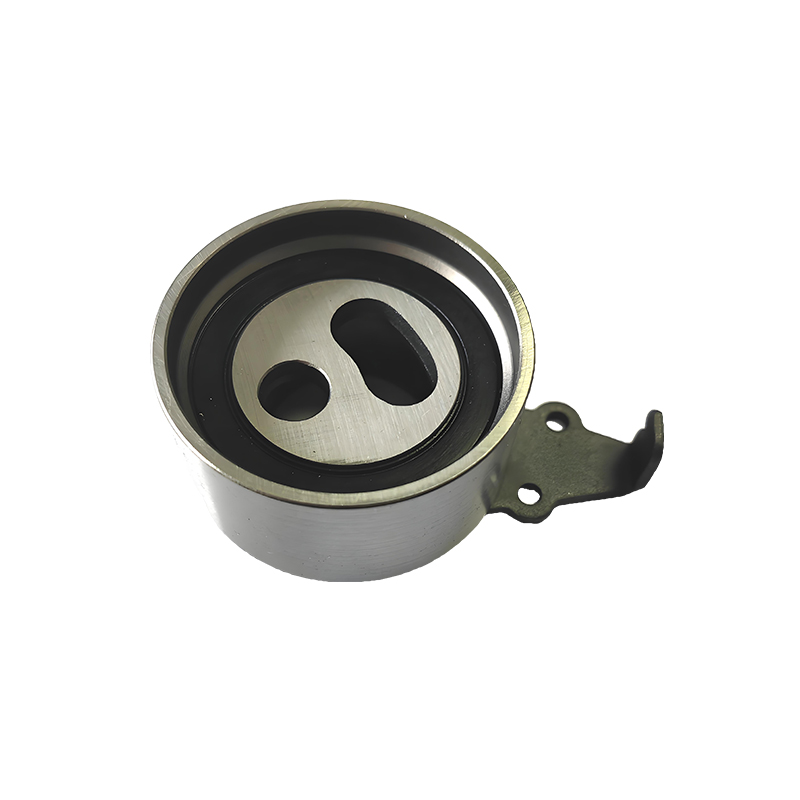
During the installation process of automotive tensioner bearings, it is necessary to focus on six core links: tool adaptation, component cleaning, installation techniques, torque control, environmental requirements and follow-up inspections. The specific precautions are as follows:
1. Preparation of tools and parts
Special tools to use
Special tools for bearing installation and disassembly (such as sleeves, pullers, hydraulic devices, etc.) must be used to avoid direct knocking of the bearings. For example, tapping a copper rod can easily cause uneven axial force on the bearing, causing cage deformation or rolling element damage, and even causing copper powder to fly into the bearing and cause failure.
The size of the tool must exactly match the specification of the bolt. A deviation in the size of the wrench may cause slippage during disassembly or tightening, damaging the bolt or the tensioner.
Parts cleaning and inspection
Before installation, the bearings, shafts and mounting holes must be thoroughly cleaned to remove oil, dust or metal debris. Impurities entering the bearing will accelerate wear and even cause early failure.
Check whether the bearing model matches the vehicle parameters and confirm there are no cracks, burrs or rust. For old bearings, it is necessary to measure whether the radial clearance and axial clearance are within the qualified range.
2. Installation techniques and operating specifications
Avoid direct knocks
It is strictly forbidden to directly knock the inner or outer ring of the bearing. The force should be applied evenly on the end face of the bearing ring through a sleeve or press. For example, during installation, you can use a copper sleeve to pad the inner ring of the bearing, and tap the sleeve with a hammer to prevent the bearing from tilting or skewing.
If the inner and outer rings need to be installed at the same time, a backing plate must be used to ensure that the force acts evenly on the inner and outer rings to avoid force transmission through the rolling elements, otherwise the working surface will be crushed.
Heating installation method (applicable to large size bearings)
For bearings with large interference, oil bath heating or induction heater can be used to heat to 80℃-100℃ (maximum not exceeding 120℃), and the principle of thermal expansion and contraction can be used to assist installation. It must be installed and tightened quickly after heating to prevent axial gaps from appearing after cooling.
For bearings with seals or dust covers, the heating temperature must not exceed 80°C to avoid damage to the sealing structure.
Installation direction of special bearings
Bearings with magnetic coding rings (such as those used in ABS systems) need to be installed in the direction marked, usually with the magnetic side facing the inside of the wheel. Installation errors may cause abnormal sensor signals and affect the function of the vehicle safety system.
3. Torque control and tightening requirements
Operate strictly according to the torque value
When tightening the tensioner bolts, a torque wrench must be used according to the torque value specified in the vehicle maintenance manual. Insufficient torque may cause the tensioner to loosen, causing the belt to slip or fall off; excessive torque may damage the threads or bearings.
For example, the tightening torque of the tensioner bolts of a certain vehicle model is 40-50N·m, and this range must be strictly followed.
Step-by-step tightening and symmetrical operation
For components that require multiple bolts to be fastened (such as tightening wheel arm fixing bolts), they should be tightened step by step in diagonal order to ensure uniform stress and avoid local stress concentration.
4. Environment and operating conditions
Dry and clean installation environment
Installation should be performed in a dust-free, dry environment away from metal processing equipment or places where debris is generated. If it must be operated in a complex environment, dust-proof measures must be taken (such as covering with dust-proof cloth).
Bearings must be kept in their original packaging before installation to avoid exposure to moisture or pollution.
Lubrication and anti-rust treatment
Before installation, a small amount of lubricating oil can be applied to the surface of the shaft or bearing seat hole to reduce installation resistance and prevent rust. However, it should be noted that anti-rust oil usually does not require cleaning and can be installed directly; if grease needs to be added, the bearings need to be cleaned with gasoline and then blown dry.
5. Post-installation inspection and testing
Belt tension and direction inspection
After the installation is completed, the position of the tensioner pulley needs to be adjusted to make the belt tension moderate. Too much tension can cause premature belt wear or breakage, too little can cause slipping. You can use a belt tension meter to measure it, or judge it through experience (such as pressing the belt with your hand, the sinkage amount should be within the specified range).
Check that the belt is running correctly and that it is not twisted or folded and does not interfere with surrounding components.
Tensioner rotation and noise test
Turn the tensioning wheel manually to check whether it is smooth and whether there is any jamming or abnormal sound. If the rotation resistance is too large or there is abnormal noise, the bearing may be improperly installed or damaged.
Start the engine, observe whether the tensioner pulley is stable during operation, and listen for any abnormal noise. Any slight squeaking could be a sign of an underlying problem.
Vehicle road test verification
After the installation is completed, a short-distance road test is required to check whether the tensioner pulley and belt work normally without abnormal noise or vibration when the vehicle is accelerating, decelerating or on bumpy roads.