English
新闻
Home » News Center » Industry information
 
News Center
 
The maintenance cycle of special bearings for automotive tensioners needs to be comprehensively judged based on the vehicle model, usage environment and maintenance content. It is generally recommended to perform basic inspection and lubrication every 2 years or 60,000 kilometers, and perform in-depth maintenance at 80,000 kilometers, but the specifics need to be based on the vehicle maintenance manual. The following is a detailed description: 1. The core basis of the maintenance cycle is the basic maintenance cycle. For most models of tensioners (including special bearings), it is recommended to perform basic inspection and lubrication every 2 years or 60,000 kilometers. This cycle is suitable for regular driving environments (such as urban roads, highways), and the vehicle is not overloaded for a long time or starts and stops frequently. In-depth maintenance cycle If the vehicle is used in a harsh environment (such as dusty, humid, high temperature) or has intense driving habits (such as frequent rapid acceleration, sudden braking), it is recommended to shorten the maintenance cycle to every 80,000 kilometers for in-depth maintenance, including cleaning bearings, replacing grease, checking wear, etc. Model differences: Japanese cars: such as Mazda 6, etc., the maintenance cycle of some models can be extended to 3-


12

2025-11

[Industry information] Can the non-standard automobile tensioner bearing be replaced separately if it is broken?
After the non-standard automotive tensioner bearing is damaged, whether it can be replaced individually needs to be comprehensively judged based on the bearing structure, damage degree, installation conditions and economy. In most cases, it can be replaced individually, but the installation accuracy and quality need to be strictly controlled. The following is a specific analysis: 1. Feasibility of separate replacement bearing structure: If the non-standard automotive tensioner bearing is of a separable design (for example, the inner and outer rings can be disassembled separately), the faulty part can be directly replaced after damage, without the need for overall replacement. However, if it is an integral structure, individual replacement may involve complex disassembly, and the difficulty of the operation needs to be evaluated. Degree of damage: If only the bearing raceway, roller or cage is damaged, but other components (such as shaft, seat hole) are not worn, it is a reasonable choice to replace the bearing alone. However, if the shaft or seat hole is worn or deformed due to long-term operation, it must be repaired or replaced simultaneously, otherwise the new bearing may fail quickly due to poor fit. Installation conditions: For individual replacement, ensure that the installation environment is clean (to avoid impurities entering the bearing) and the tools are precise.

08

2025-11

[Industry information] What should you pay attention to during the installation process of automobile tensioner bearings?
During the installation process of automotive tensioner bearings, it is necessary to focus on the six core links of tool adaptation, component cleaning, installation techniques, torque control, environmental requirements and follow-up inspections. The specific precautions are as follows: 1. Tools and component preparation Special tools must be used for bearing installation and disassembly (such as sleeves, pullers, hydraulic devices, etc.) to avoid direct knocking of the bearings. For example, tapping a copper rod can easily cause uneven axial force on the bearing, causing cage deformation or rolling element damage, and even causing copper powder to fly into the bearing and cause failure. The size of the tool must exactly match the specification of the bolt. A deviation in the size of the wrench may cause slippage during disassembly or tightening, damaging the bolt or the tensioner. Component Cleaning and Inspection Before installation, the bearings, shafts and mounting holes must be thoroughly cleaned to remove oil, dust or metal debris. Impurities entering the bearing will accelerate wear and even cause early failure. Check whether the bearing model matches the vehicle parameters and confirm there are no cracks, burrs or rust. for

28

2025-10

[Industry information] Installation method of special non-standard bearings for automobile tensioners
The installation of special non-standard bearings for automobile tensioners must strictly follow standardized operations. Combined with the characteristics of non-standard bearings, the following are the specific installation methods and precautions: 1. Prepare the environment before installation and clean it to ensure that the installation environment is free of dust and impurities to prevent foreign matter from entering the bearing and affecting the operation accuracy. Use a clean cloth to wipe the wheel hub, shaft surface and bearing seat hole to remove oil and rust. Inspect tools and components and prepare special pressing tools (such as presses), torque wrenches, jacks, safety brackets, etc. to ensure that the accuracy of the tools meets the requirements. Check whether the new bearing model matches, whether there are any cracks or scratches on the appearance, and whether the measured dimensions are qualified. Confirm that the tensioner assembly (including belts, bolts, etc.) is not worn or damaged. Vehicle support uses a jack to lift the vehicle and firmly support it on the safety bracket to prevent the vehicle from shaking during operation. 2. Installation steps: Remove the old parts and remove the tires, brake calipers and wheel hubs to expose the position of the tensioner. Loosen the tensioner bolts and remove the old bearing and

16

2025-10

[Industry information] Maintenance and maintenance of non-standard bearings for automobile tensioners
The maintenance and upkeep of non-standard automotive tensioner bearings needs to start from the four core links of cleaning and inspection, lubrication and maintenance, installation and debugging, and regular inspections, and formulate targeted plans based on the characteristics of non-standard bearings. The specific operations and precautions are as follows: 1. Cleaning and inspection: Thoroughly remove impurities and accurately assess the status. Disassembly and cleaning Use special tools (such as bearing pullers) to disassemble the tensioner bearings to avoid deformation caused by violent operations. Use gasoline, kerosene or special bearing cleaning agent to soak the bearing, and use a soft brush to lightly brush the rolling surface, raceway and cage to remove oil stains, metal shavings and other impurities. Note: Wear protective gloves when cleaning to avoid direct skin contact with solvents; blow dry with compressed air or dry naturally after cleaning to ensure no residual cleaning agent. Appearance and Dimensional Inspection Raceway/Rolling Surface: Check for spalling, pitting, cracks or signs of abnormal wear. Cage: Observe whether it is broken, deformed or loose. Clearance and dimensional accuracy: Use a micrometer to measure the inner diameter,

07

2025-10

[Industry information] What are the advantages of special bearings for automotive tightening wheels
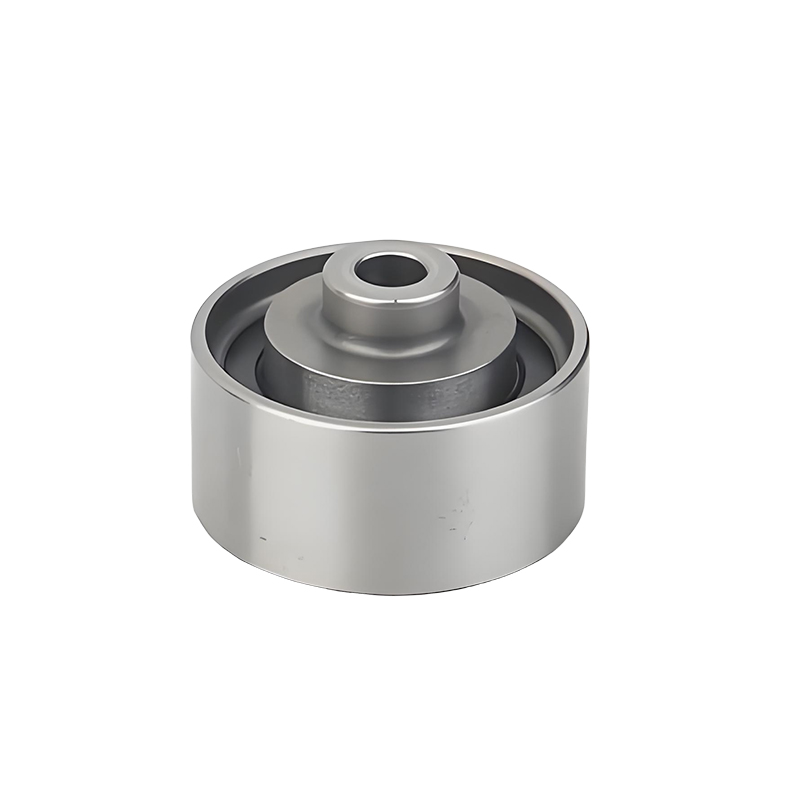
The advantages of special bearings for automotive tightening wheels are mainly reflected in structural adaptability, performance stability, durability, sealing and customized services. The specific analysis is as follows: Structural adaptability: compact design, precise matching, special bearings for automotive tightening wheels adopt a compact structural design. The outer diameter, inner diameter and width can be customized according to the size of the tightening wheel hub and shaft to ensure close cooperation with the wheel body and reduce installation clearance. For example, the Xiali N5 air conditioning tightening wheel bearing adopts a non-standard size with a center hole of about 25 mm, an outer diameter of 42 mm and a thickness of 12 mm. It is incompatible with standard bearings, but it can perfectly adapt to limited space. In addition, the narrow width design reduces the bearing width as much as possible while meeting the load requirements to accommodate the compact installation space in the engine compartment. The special-shaped cage is made of engineered plastic or metal stamped material, and the structure may be asymmetrical design, which optimizes the distribution of rolling elements and the flow of lubricating oil to improve operational stability. Performance stability: dynamic adjustment
  • Total 11 pages  Go to Page
  • Go

Quick link

Product Center

Please leave a message here and we will give you timely feedback.

Online Message

Tel : 13506752077
Email : hccbearing@163.com
Address : No. 98, Fengshuwan, Shixi Village, Chengnan Township, Xinchang County, Shaoxing City, Zhejiang Province
Copyright © 2025 Xinchang Huachang Bearing Factory. All rights reserved. Site Map