English
新闻
Home » News Center » Industry information
 
News Center
 
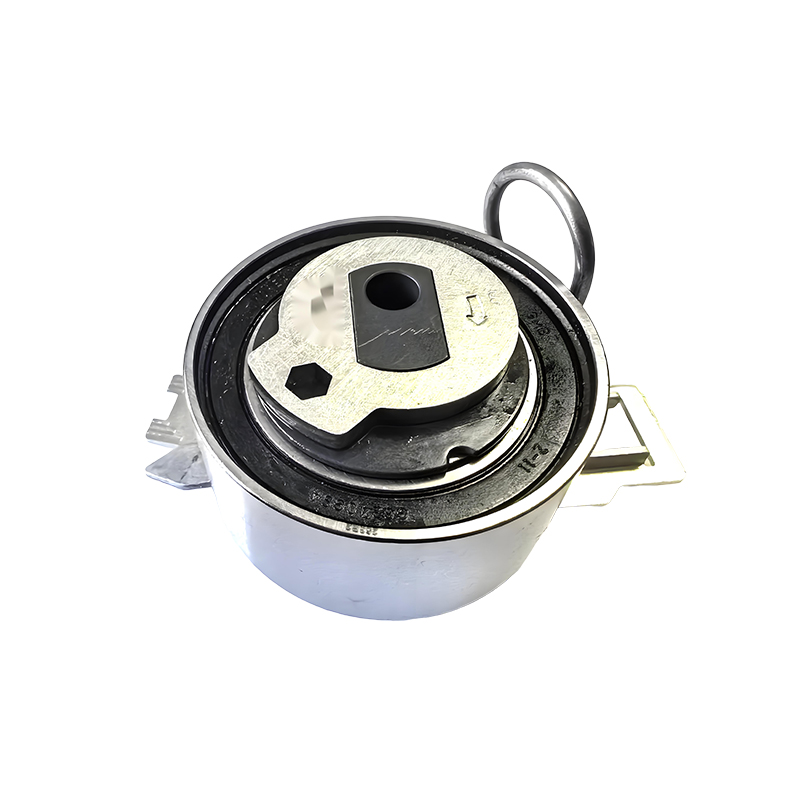
Tightening wheel bearings are key components used in mechanical transmission systems to adjust the tension of belt or chains. Their structure and working principle directly affect the stability, life and efficiency of the transmission system. The following is a detailed analysis from four aspects: structural composition, working principle, failure mode and maintenance key points: 1. Structural composition tightening wheel bearings are usually composed of four parts: bearing body, tightening arm, spring device and fixed bracket, and each part works together to achieve the tensioning function. 1. Bearing body type: Deep groove ball bearings or tapered roller bearings are mostly used. The former is suitable for scenarios where radial loads are mainly used (such as engine accessory belts), and the latter can withstand bidirectional axial forces (such as heavy mechanical chain transmission). Sealing design: To prevent grease leakage and external impurities from intrusion, bearings are usually equipped with rubber seals (such as RS type) or metal dust covers (such as ZZ type). Some high-end products adopt contact seals (such as 2RS type), with better sealing properties but slightly greater friction.

23

2025-07

[Industry information] How to use non-standard bearings for automobile tightening wheels
Non-standard bearings for automotive tightening wheels are customized bearings designed for special working conditions of tightening wheels. The use method must be standardized for the functional characteristics of the tightening wheels (such as adjusting belt tension, absorbing vibration, and bearing axial/radial composite load). The following are detailed usage guidelines: 1. Preparation before installation 1. Check the appearance of bearings and accessories: Make sure that the bearings are free of cracks, rust, burrs or oil stains. Special structures of non-standard design (such as widened raceways and special cages) must be consistent with the drawings. Check whether the tightening wheel arms, bolts, springs and other accessories are intact to avoid abnormal bearing stress caused by damage to the accessories. Dimension matching: Check the matching tolerances of the bearing inner diameter, outer diameter, width and tightening wheel shaft and hub (usually H7/h6 or H7/k6 transitional matching). Non-standard bearings may involve special clearances (such as C3 and C4 groups). You need to use a dial gauge to measure whether the actual clearance meets the design requirements (general radial clearance 0.05~

21

2025-07

[Industry information] What are the advantages and disadvantages of automotive tightening wheel bearings
Automobile tightening wheel bearings are key components in the engine timing system or accessories transmission system. They are mainly used to automatically adjust belt tension and ensure stable transmission between the belt and the pulley. Its advantages and disadvantages can be comprehensively analyzed from the perspectives of structural design, performance performance, maintenance cost and applicable scenarios. The specific details are as follows: 1. Advantages 1. Automatically adjust belt tension and extend system life Dynamic compensation: The tensioning wheel bearing can automatically adjust the tension according to the belt extension through a built-in spring or hydraulic mechanism to avoid slippage, abnormal noise or wear caused by belt slack. Reduce faults: Stable tension prevents belt tooth jumps (timing system) or falls off (attachment drivetrain), reducing the risk of engine damage (such as the top valve). Extend life: Compared with the manually adjusted fixed tensioner, the automatic tightening wheel can reduce abnormal wear and tear on the belt and pulleys and extend the replacement cycle (usually extended from 60,000 kilometers to more than 100,000 kilometers). 2. Compact structure and easy to install

19

2025-07

[Industry information] What are the applicable scopes of special bearings for automobile tightening wheels
Special bearings for automotive tightening wheels are key components in the timing system or accessories transmission system of the automobile engine. They are mainly used to support the tightening wheels and ensure their smooth rotation, thereby maintaining the tension of the belt (such as timing belts and accessories belts) and preventing the belt from slipping or falling off. Its application range is wide, covering different vehicle models, engine types and usage scenarios. The following is a detailed analysis: 1. Application scope by vehicle classification Passenger cars (sedans, SUVs, MPVs, etc.) Economical models: The engines mostly use a single accessory belt (drive air conditioning compressors, generators, etc.), and belt tension must be maintained through tightening wheel bearings. Luxury models: The engine may be equipped with multiple belts (such as timing belt + accessory belt) or complex tensioning systems, which require higher accuracy and durability of the bearing. Application scenario: Almost all passenger car engines equipped with belt transmission require tightening wheel bearings. Typical models: Advantages: Compact design adapts to engine compartment space limitations,

16

2025-07

[Industry information] What are the application scenarios for non-standard bearings of automobile tightening wheels
Automotive tightening wheel non-standard bearings are customized bearings designed for tightening wheels. Their size, structure or performance parameters are adjusted according to specific vehicle models, engine layout or usage conditions to meet non-standardized needs. Compared with general bearings, non-standard bearings have more advantages in adaptability, durability and functional integration, and are mainly used in the following scenarios: 1. The engine front-end accessories drive system (FEAD) tightening wheel is the core component of the FEAD system. By adjusting belt tension, the engine accessories (such as generators, air conditioning compressors, water pumps, steering assist pumps, etc.) are ensured to operate stably. The applications of non-standard bearings in this scenario include: space-constrained compact engine cases: The engine compartment of hybrid models is compressed due to the integrated motor, battery and other components, and tightening wheel bearings with smaller diameter or special-shaped structures need to be customized to adapt to narrow installation space. Advantages: Non-standard design can reduce the outer diameter or axial length of the bearing to avoid interference with other components.

14

2025-07

[Industry information] What is the function of car tightening wheels
The automobile tightening wheel is a key component in the engine timing system or accessories transmission system. Its core function is to dynamically adjust the tension of the belt or chain to ensure stable and efficient operation of the transmission system, while extending the service life of related components. The following are its specific functions and technical details: 1. The core function of the tightening wheel 1. Maintain constant tension of the belt/chain to prevent slipping: When the engine is running, the belt or chain will relax due to temperature changes, wear or load fluctuations. The tightening wheel automatically adjusts its position through spring or hydraulic pressure, and always maintains the friction between the belt and the drive wheel (such as crankshaft pulley and camshaft timing wheel) to avoid power loss or timing misalignment caused by slippage. Reduce vibration: A loose belt can produce periodic vibrations, causing noise and accelerating bearing wear. The elastic design of the tightening wheel can absorb vibration energy and make the transmission more stable. 2. Automatic compensation for component wear and thermal expansion: the belt will be used for a long time
  • Total 10 pages  Go to Page
  • Go

Quick link

Product Center

Please leave a message here and we will give you timely feedback.

Online Message

Tel : 13506752077
Email : hccbearing@163.com
Address : No. 98, Fengshuwan, Shixi Village, Chengnan Township, Xinchang County, Shaoxing City, Zhejiang Province
Copyright © 2025 Xinchang Huachang Bearing Factory. All rights reserved. Site Map