English
新闻
Home » News Center
 
News Center
 
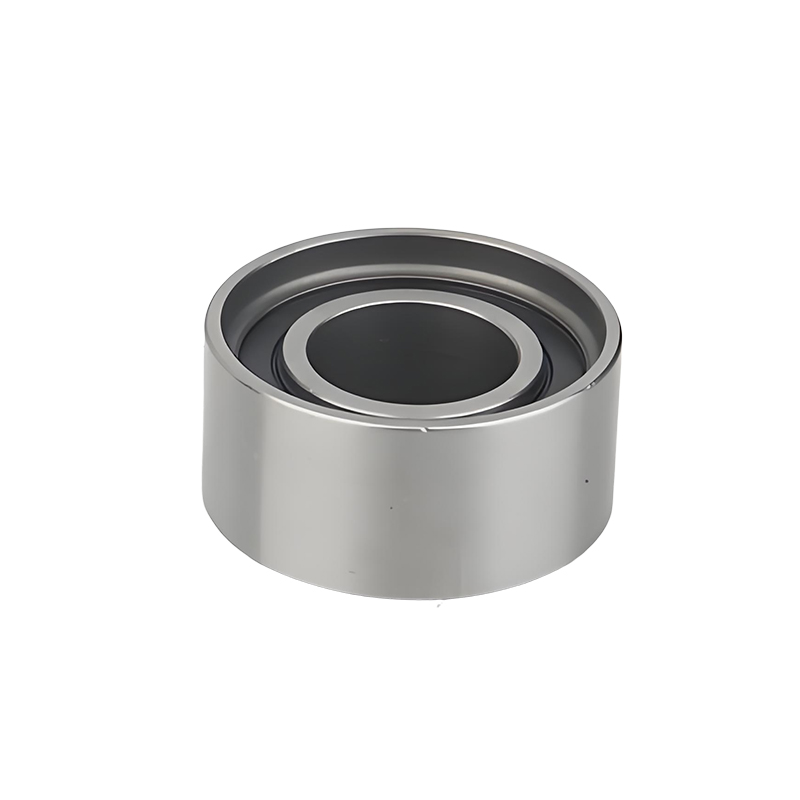
Automotive tensioner bearing seals have both tight contact (contact seal) and light contact (non-contact seal) designs. The specific choice depends on the working conditions. The following is a detailed analysis of the two sealing methods: Contact sealing (tight contact) principle: a rubber or polymer sealing ring is used to closely contact the inner or outer ring of the bearing to form a gap-free sealing structure. Features: Good sealing: can effectively prevent liquid, moisture and solid particles from entering the bearing, suitable for use in harsh environments. High friction: Due to the direct contact between the seal and the mating part, friction and heat will be generated during rotation, which can easily cause lubrication problems, and the contact surface is easy to wear, resulting in a decrease in sealing effect. Applicable working conditions: Mainly suitable for medium and low-speed working environments. At the same time, the surface hardness of the shaft in contact with the seal is required to be greater than 40HRC, and the surface roughness Ra must meet certain standards. Application scenario: In automobile tensioner bearings, contact seal design is often used for sealing.

06

2025-12

[Industry information] What are the application scenarios of automobile tensioners?
The automotive tensioner is a key component in the engine timing system or accessory transmission system. It is mainly used to adjust the belt tension and ensure stable transmission between the belt and the drive wheel. Its application scenarios are wide, covering engine timing systems, accessory drive systems and performance guarantee under special working conditions, as follows: 1. Timing belt/chain transmission function in engine timing systems: In the timing belt or chain transmission system, the tensioner provides continuous tension through a spring or hydraulic mechanism to prevent the belt or chain from relaxing due to vibration, wear or temperature changes, ensuring that the opening and closing moments of the engine intake and exhaust valves are accurately synchronized with the piston movement. Typical scenario: timing belt drive of gasoline engine (such as some economical models). Timing chain drive of diesel engine (needs to be equipped with hydraulic tensioner to adapt to high torque conditions). Importance: If the tensioner fails and causes timing deviation, it may cause the valve to collide with the piston (valve lift), causing the engine to

04

2025-12

[Industry information] Installation steps and precautions for special non-standard bearings for automobile tensioners
Installation steps and precautions for special non-standard bearings for automobile tensioners 1. Installation steps preparation Tool preparation: Prepare appropriate wrenches, screwdrivers, presses (if necessary), induction heating equipment (if needed), cleaning tools (such as rags, oilstones, fine sandpaper), etc. Component inspection: Check whether the model and size of the new special non-standard bearing for the tensioner match the vehicle, and ensure that the bearing is free from damage, burrs, scratches and other defects. At the same time, check whether the mating surfaces such as the journal, the surface of the bearing housing hole, and the shoulder end face are clean and free of rust layers, wear debris, sand, dust, soil and other attachments. If there is any rust layer, you can use a fine file to remove it and polish it with fine emery cloth. Clean environment: Make sure the installation environment is clean and tidy, with enough operating space to prevent impurities and dust from entering the inside of the bearing. Remove the old tensioner and secure the vehicle: Use the hand brake to secure the vehicle to prevent it from moving forward or backward under the support of the safety bracket. Loosen the bolt: Loosen the tightening wheel


01

2025-12

[Industry information] What are the functions of non-standard bearings for automobile tensioners?
Non-standard bearings in automobile tensioners (if they refer to customized bearings for tensioners) play a core support and function optimization role in the transmission system. Their functions can be summarized as the following key points: 1. Support the rotating body to ensure structural stability. Core functions: As the core component of the tensioner, the non-standard bearings directly support the rotation of the wheel body and bear the radial load (such as belt tension) and axial load (such as lateral force when the belt deflects) generated by the belt drive. Non-standard advantages: For the special structure of the tensioner wheel (such as compact design, special-shaped wheel body), non-standard bearings can achieve precise cooperation with the wheel body by customizing the inner/outer diameter, width or channel curvature, avoiding looseness or jamming caused by standard bearings due to size mismatch. 2. Reduce friction and improve transmission efficiency. Rolling friction replaces sliding friction: Non-standard bearings convert the sliding friction between the belt and the wheel body into rolling friction through the rolling motion of rolling elements (such as steel balls or rollers), and the friction coefficient is significantly reduced.

28

2025-11

[Industry information] How to use special bearings for automobile tensioners
The special bearing for automobile tensioner is a key component in the automobile engine timing system or accessory transmission system. Its function is to support the tensioner through the rotation of the bearing, so that the transmission belt (such as timing belt, multi-V belt) maintains appropriate tension and ensures the stable operation of the transmission system. The following is a detailed description of its usage and precautions: 1. Preparation before installation Check the bearings and accessories to confirm that the bearing model matches the vehicle model, and check whether there are cracks, rust or deformation in the appearance of the bearing. Check whether the tensioner arms, springs, bolts and other accessories are intact and ensure they are not worn or loose. Clean installation environment Thoroughly clean the installation location in the engine compartment to prevent dust, oil or metal debris from entering the inside of the bearing. Use special cleaner to wipe the contact surface between the bearing seat and the tensioner arm to ensure that there are no impurities. Lubrication treatment (some models require manual lubrication). If the bearing has an open structure (non-sealed type), an appropriate amount of high-temperature grease (such as lithium-based grease) needs to be applied before installation.

26

2025-11

[Industry information] What occasions are non-standard automotive tensioner bearings suitable for?
Non-standard automotive tensioner bearings are mainly suitable for special automotive transmission system situations that cannot meet the standard bearing size, performance or structure. Its application scenarios and characteristics are as follows: 1. Core application scenarios. Special models are suitable for micro/compact cars: Micro cars such as Wuling Rongguang B12 have limited engine compartment space, so smaller tensioner bearings need to be customized to adapt to narrow installation environments. High-performance or modified vehicles: Some high-performance models or modified vehicles have extremely high precision requirements for the transmission system, and need to optimize tension control through non-standard bearings to reduce belt slippage or wear. Non-standard transmission system design Multi-belt transmission system: Some models use a complex transmission layout with multiple belts (such as a common belt for generators, air-conditioning compressors, and water pumps). Non-standard bearings are required to adjust the position or angle of the tensioner pulley to ensure balanced tension of each belt. Special belt types: If reinforced belts or special-shaped belts (such as toothed belts, poly-V belts) are used, the bearings need to be customized to match the pulleys
  • Total 10 pages  Go to Page
  • Go

Quick link

Product Center

Please leave a message here and we will give you timely feedback.

Online Message

Tel : 13506752077
Email : hccbearing@163.com
Address : No. 98, Fengshuwan, Shixi Village, Chengnan Township, Xinchang County, Shaoxing City, Zhejiang Province
Copyright © 2025 Xinchang Huachang Bearing Factory. All rights reserved. Site Map