English
新闻
Home » News Center
 
News Center
 
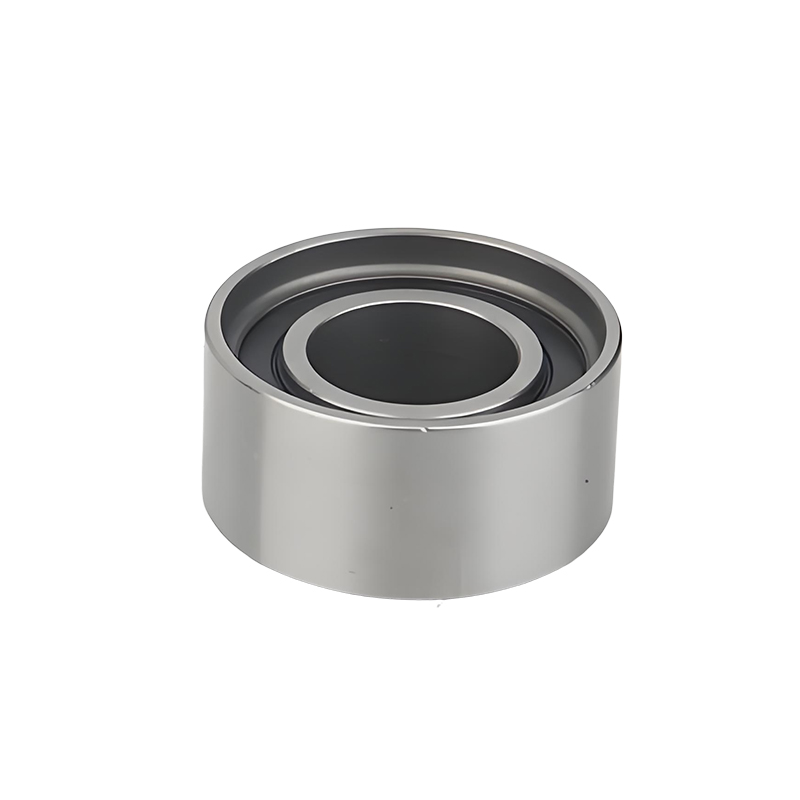
Non-standard automotive tensioner bearings are mainly suitable for special automotive transmission system situations that cannot meet the standard bearing size, performance or structure. Its application scenarios and characteristics are as follows: 1. Core application scenarios. Special models are suitable for micro/compact cars: Micro cars such as Wuling Rongguang B12 have limited engine compartment space, so smaller tensioner bearings need to be customized to adapt to narrow installation environments. High-performance or modified vehicles: Some high-performance models or modified vehicles have extremely high precision requirements for the transmission system, and need to optimize tension control through non-standard bearings to reduce belt slippage or wear. Non-standard transmission system design Multi-belt transmission system: Some models use a complex transmission layout with multiple belts (such as a common belt for generators, air-conditioning compressors, and water pumps). Non-standard bearings are required to adjust the position or angle of the tensioner pulley to ensure balanced tension of each belt. Special belt types: If reinforced belts or special-shaped belts (such as toothed belts, poly-V belts) are used, the bearings need to be customized to match the pulleys

25

2025-11

[Industry information] Performance of automotive tensioner wheel bearings
As a key component of the transmission system, the automotive tensioner bearing directly affects the stability, durability and vehicle comfort of the belt drive. The specific performance characteristics are as follows: 1. Core functions and structural characteristics Automatic tension adjustment The tensioner bearing is integrated into the tensioner assembly, and dynamic tension adjustment is achieved through a torsion spring or hydraulic mechanism. When the belt relaxes due to wear or temperature changes, the wheel body supported by the bearing automatically moves outward to compensate for the belt elongation and maintain the optimal tension state (for example, the timing belt tension needs to be controlled within a specific range to avoid tooth skipping or breakage). High-precision support and low-friction design support the rotating body: the outer ring of the bearing is combined with the wheel body, and the inner ring is fixed on the tensioning arm to ensure smooth rotation of the wheel body. Rolling friction replaces sliding friction: using rolling bearings (such as deep groove ball bearings or angular contact bearings), the friction coefficient is 60%-80% lower than that of sliding bearings, reducing energy loss. Rotation accuracy guarantee: bearing clearance is controlled at ±0.01

22

2025-11

[Industry information] What is the function of special non-standard bearings for automobile tensioners?
Special non-standard bearings for automotive tensioners are customized bearings designed specifically for automotive tensioners. Their functions are closely related to the overall function of the tensioners. They are mainly responsible for key tasks such as supporting, transmitting power, maintaining tension, and adapting to complex working conditions. The following is an analysis of the specific functions: 1. Supporting the rotation of the tensioner wheel. The core support function: the tensioner wheel is installed on the engine or transmission system bracket through bearings. As a rotating component, the bearing directly bears the radial load (such as belt tension) and axial load (such as vibration and impact) of the tensioner wheel, ensuring that the tensioner wheel rotates smoothly. Advantages of non-standard design: Non-standard bearings can be customized in size, shape and installation method according to the special structure of the tensioner wheel (such as special-shaped hub, asymmetric mounting holes, etc.) to ensure a perfect match with the tensioner wheel and avoid wear or looseness caused by incompatibility of standard bearings. 2. Transmit power and reduce friction. Power transmission hub: the tensioner pulley communicates with the engine crankshaft, generator, air conditioning compressor, etc. through the belt.

19

2025-11

[Industry information] What are the maintenance methods for non-standard bearings of automobile tensioners?
The maintenance methods of non-standard automotive tensioner bearings include cleaning inspection, lubrication and maintenance, installation and debugging, regular inspection and maintenance, etc., as follows: Cleaning inspection: disassembly and cleaning: remove the tensioner bearing from the vehicle, and use cleaning agents such as gasoline and kerosene to clean the bearings thoroughly. During the cleaning process, the bearings need to be protected to avoid contact with dirt or damage to the rolling surface. Check the wear: After cleaning, carefully check the bearing's raceway surface, rolling surface, mating surface and cage for wear. At the same time, check whether the bearing clearance becomes larger and whether the dimensional accuracy decreases. Lubrication and maintenance: Select lubricant: Choose the appropriate lubricant according to the bearing type and usage environment. Automotive tensioner bearings are often lubricated with butter, but in some special cases, butter cannot be used, otherwise it will cause the belt to slip. Appropriate amount of lubricant: Add an appropriate amount of lubricant to the bearing lubrication part to avoid overfilling, which may cause spillage and stain the surrounding area during operation. The lubrication method can be smearing or dripping


17

2025-11

[Industry information] How often do special bearings for automotive tensioners need to be maintained?
The maintenance cycle of special bearings for automotive tensioners needs to be comprehensively judged based on the vehicle model, usage environment and maintenance content. It is generally recommended to perform basic inspection and lubrication every 2 years or 60,000 kilometers, and perform in-depth maintenance at 80,000 kilometers, but the specifics need to be based on the vehicle maintenance manual. The following is a detailed description: 1. The core basis of the maintenance cycle is the basic maintenance cycle. For most models of tensioners (including special bearings), it is recommended to perform basic inspection and lubrication every 2 years or 60,000 kilometers. This cycle is suitable for regular driving environments (such as urban roads, highways), and the vehicle is not overloaded for a long time or starts and stops frequently. In-depth maintenance cycle If the vehicle is used in a harsh environment (such as dusty, humid, high temperature) or has intense driving habits (such as frequent rapid acceleration, sudden braking), it is recommended to shorten the maintenance cycle to every 80,000 kilometers for in-depth maintenance, including cleaning bearings, replacing grease, checking wear, etc. Model differences: Japanese cars: such as Mazda 6, etc., the maintenance cycle of some models can be extended to 3-

12

2025-11

[Industry information] Can the non-standard automobile tensioner bearing be replaced separately if it is broken?
After the non-standard automotive tensioner bearing is damaged, whether it can be replaced individually needs to be comprehensively judged based on the bearing structure, damage degree, installation conditions and economy. In most cases, it can be replaced individually, but the installation accuracy and quality need to be strictly controlled. The following is a specific analysis: 1. Feasibility of separate replacement bearing structure: If the non-standard automotive tensioner bearing is of a separable design (for example, the inner and outer rings can be disassembled separately), the faulty part can be directly replaced after damage, without the need for overall replacement. However, if it is an integral structure, individual replacement may involve complex disassembly, and the difficulty of the operation needs to be evaluated. Degree of damage: If only the bearing raceway, roller or cage is damaged, but other components (such as shaft, seat hole) are not worn, it is a reasonable choice to replace the bearing alone. However, if the shaft or seat hole is worn or deformed due to long-term operation, it must be repaired or replaced simultaneously, otherwise the new bearing may fail quickly due to poor fit. Installation conditions: For individual replacement, ensure that the installation environment is clean (to avoid impurities entering the bearing) and the tools are precise.
  • Total 10 pages  Go to Page
  • Go

Quick link

Product Center

Please leave a message here and we will give you timely feedback.

Online Message

Tel : 13506752077
Email : hccbearing@163.com
Address : No. 98, Fengshuwan, Shixi Village, Chengnan Township, Xinchang County, Shaoxing City, Zhejiang Province
Copyright © 2025 Xinchang Huachang Bearing Factory. All rights reserved. Site Map